.

Showing posts with label cars. Show all posts

Wednesday, November 27, 2019

What Items do I keep Handy in my Car?


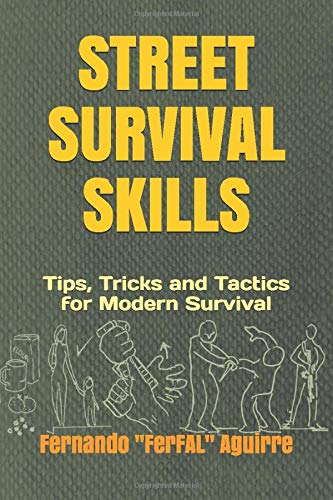
Guys! If you haven’t bought one already, grab a copy of my latest book “Street Survival Skills”  I go over a bunch of practical stuff including defensive driving skills, awareness while in the car and other great tips. I have no doubt, you'll love it.


Street Survival Skills: Tips, Tricks and Tactics for Modern Survival 

I recently did a video about the topic, what car I consider well suited for my needs, the capabilities I’m looking for and also some of the stuff I keep handy in the cabin.


There’s really nothing out of the ordinary but it’s a system that has worked well for me over the years.

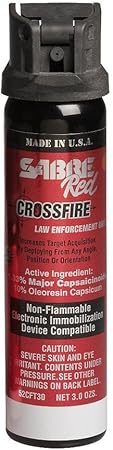
Big can of Pepper Spray
Sabre Red 52CFT30 Crossfire Stream (MK-4) Pepper Spray, 1.33% MC, 3.0 Ounces
Keep it handy, even if you have a gun… especially if you have a gun. Most wannabe badasses can be handled with a bit of OC spray, avoiding the terrible legal mess of explaining the use of lethal force.
I also keep one next to the front door in the house and a couple smaller cans my wife and I carry occasionally.

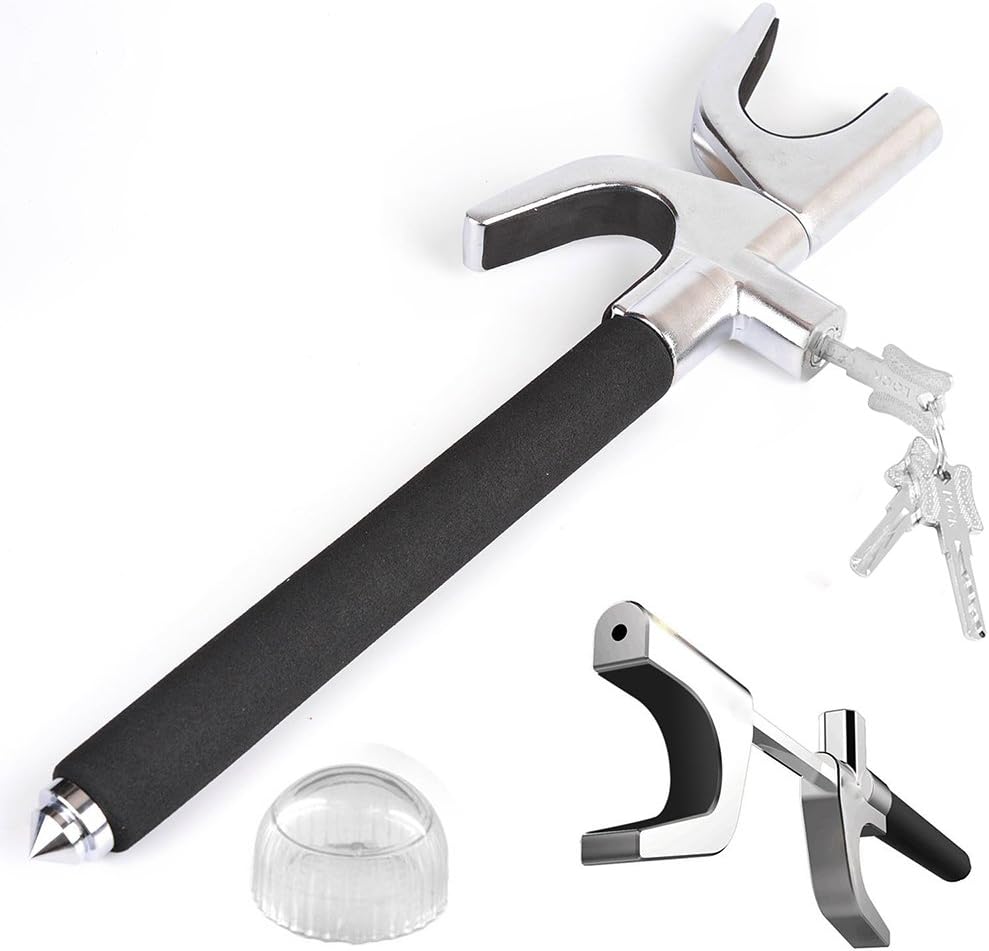
Anti-Theft Bar

Half Klingon Bat'leth battle axe, half anti-theft bar, this is the exact same one I have, as shown in the video.
Good for securing the car too. I guess the steering wheel itself can be cut, theres videos about it, but in my experience (as in someone breaking into my car and trying to steal it when I had one of these things in the wheel) They will just give up and go looking for a car that doesn’t have a bar. Usually they just see it and don’t even bother, go look a car without it.

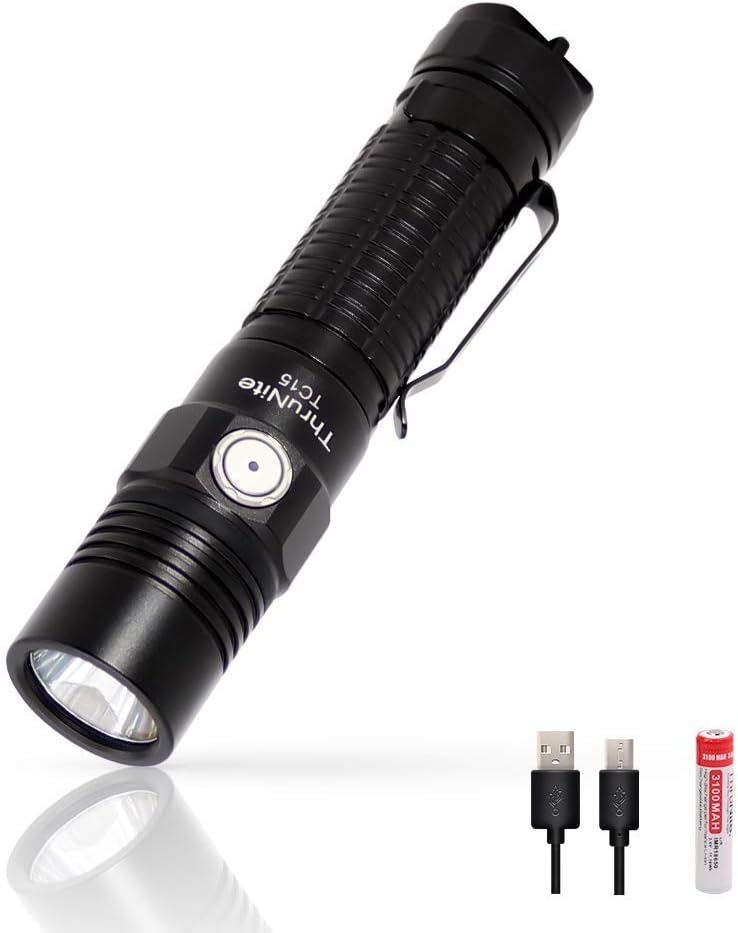
A Good Flashlight

I keep a Thrunite similar to this one, 2000 lumens and its rechargeable via micro USB port meaning I can charge it using the phone charger kept in the car.

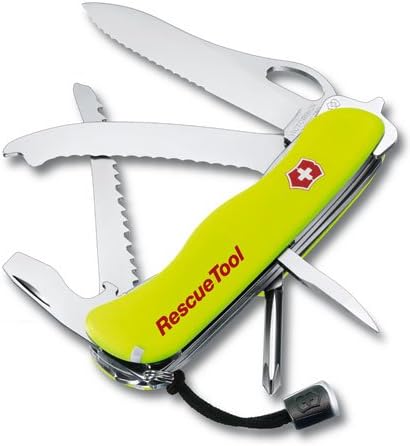
Victorinox Rescue Tool
Victorinox Swiss Army Knife Rescue Tool Jubilee
I keep it in the center glove compartment. If there’s an accident and everything flies in every direction, it stays in there and I know where to reach it. It’s a nice tool with glass breaker and seat belt cutter as well as a solid blade and big screwdriver. The burglar bar is no doubt a better glass (and skull) breaking tool given its weight but I still like having this one too.
Cheaper rescue tool? Go with the Resqme tool

Something else I’d love to have and I’ll keep an eye out during Black Friday:

There’s of course other gear I keep in the trunk in bags and will go through it in the next video.
Hope you guys have a great Thanksgiving with the family!

FerFAL
Check out my new Book “Street Survival Skills” . Fernando “FerFAL” Aguirre is the author of “The Modern Survival Manual: Surviving the Economic Collapse” and “Bugging Out and Relocating: When Staying is not an Option”

Tuesday, November 21, 2017

Reality Check: 5 common problems in your survival Kits


I was recently asked about my car kit so I took the opportunity to go through it.
What I found brought me very little peace of mind, the opposite of what preparedness is supposed to do.
After several months of neglect, my car kit was a mess and a reality check is in order.
Here are five of the most common fails found in kits.

1)Water
I had used up most of the water in my car for different reasons and only had one 2 liter bottle left in it. Hardly enough for my family if stranded in summer out in the road.
Water is so important, you end up using it up often. The problem is that sometimes we forget to resupply what we use.

2)Expired Food
While water gets used up, with food the problem I often come across as years go by is that is simply expires. Some types of food and some packaging is better than others but it’s still important to check. I just threw away several energy bars that came in individual mylar pouches. Mylar works well but it isnt magic and food can still go bad in them. Check the expiration date and replace as needed. Its cheap enough insurance.

3)Clothes
Spare clothes for each family member are an important part of the kit. For me it has saved the day more than once.
The problem is, kids grow and clothes don’t fit them anymore. I just realized we need to replace the ones we have for some that actually fit if/when needed.

4)Medical supplies
Just like food, your meds expire too. Check those vehicle first aid kits and make sure they haven’t expired. This goes for other supplies that have an expiration date or other items that require regular check, such as batteries or your fire extinguisher. Make sure it still has enough pressure.

5)Missing stuff
Oh, it sure is useful to keep a kit with gear handy. Now, you need to make sure you return everything back to its place because if not you end up with a kit missing many vital components. I just checked and cant seem to find the small folding shovel in my car kit. Who knows where that thing is now? I’m sure there are other items missing too.
FerFAL
Fernando “FerFAL” Aguirre is the author of “The Modern Survival Manual: Surviving the Economic Collapse” and “Bugging Out and Relocating: When Staying is not an Option”

Wednesday, November 30, 2016

Flash Flood: What happens if you get caught


I found this car just a couple streets from mine, right after the storm and flood I talked about in the previous post.


The difference between making it home all right or drawning is in these details, in having the right vehicle for what you are dealing with, in that extra inch of water that causes your vehicle to float, lose contact with the pavement and turns your car in the worst boat in the world. Ultimately, its about knowing when to turn around and not risk your life.
And again, the best 4x4 in the planet wont do you any good in the garage if you drive a Prius to save gas as your daily driver. Chances are your daily driver is what you'll have to face these situations when SHTF.
FerFAL
Fernando “FerFAL” Aguirre is the author of “The Modern Survival Manual: Surviving the Economic Collapse” and “Bugging Out and Relocating: When Staying is not an Option”.

Monday, October 3, 2016

5 Tips: How to (not) run over BLM protesters

Image result for blm protest run over
As America keeps changing into whatever it has been becoming during these last few years, incidents like the ones seen recently are likely to become more common. People rarely find themselves in this kind of volatile, extraordinary circumstances and often don’t know how to react. I’ve been in them more than I care to remember so what I say comes directly from years of experience, at times coming across riots, protests and especially roadblocks on daily basis, some of them more violent than others.
This is the advice I have for you.
  • Lives DO matter.
 Do NOT run over people. I’m not saying this as a disclaimer alone, I really do mean it. I fully understand how sensitive people are these days, the politics, the racial tension. Still, every single life is precious in its own way and no car, no paint job is worth a human life. I’m tired of reading about folks in the forums joking about running over BLM or whatever other activist of any kind, no matter how much you may disagree with them or not. I doubt many of them have run over people before. I can tell you one thing though: Hitting an innocent person with your car is one of the most horrible feelings you can experience. The only time I felt worse was when my then three year old son nearly died in a hospital bed. It’s that bad. People say taking any life will cause endless nightmares. I don’t know about that because it is different when some scumbag is actively trying to kill you, its you or him in which case I have no regrets. I do know that believing you just killed a person that you know wasn’t trying to kill you back messes you up. Unless you are a monster, no good person wants to carry that weight.
  • Stay informed and avoid whenever possible.
 In my case it became somewhat of a daily morning ritual. I would turn on the TV during breakfast so as to know what roads or parts of town to avoid before I hit the road. At times it was just easier to use public transportation, but its not always an option and its not always safer. If I was taking my car I would turn on the radio to listen to the news in case new roadblocks were popping up while driving. In some countries you have Apps that inform you about them too.
If you know there’s trouble, avoid it at all cost. Not only are you risking getting stuck for hours, you risk getting attacked and mugged as well. It just isnt worth it so take an alternative route. I didn’t use one back then, especially because I knew most of the city like the palm of my hand but get comfortable with your GPS.
If you happen to see a roadblock forming right in front of you, act fast. Sometimes you can drive around them quickly before they close in, sometimes you can make a quick U turn and get the hell out of there. In those moments, a second too late makes all the difference between making it home in 5 minutes or getting stuck there for hours, or worse. An agile vehicle is great for such situations. I learned to appreciate SUVs for their better than sedan ground clearance and off road capability. I don’t need to cross the nearest national park off road with it. But if I can go off the road to avoid the roadblock for a bit or go over a sidewalk or boulevard to do so, then yes I can appreciate that. This is why my daily driver is a Honda CR-V.
  • Remain calm and stay in the vehicle.
 It is easy to get scared, its easy to get angry. In both cases you’ll just make it worse. If you are scared you may panic, floor the pedal and run over a bunch of people. If you get angry you may get out of the car to confront the people blocking your way. This is a very typical reaction and one you certainly would regret. You start thinking about your rights being just as important as theirs. You think about the wasted time, about wanting to get home after a long day, about why can’t you move around like the free person that you are. You get out of the car and you are surrounded and outnumbered. It only takes one or two cowards to strike you from behind, crowd dynamics say you’re likely to get stomped on once you fall, maybe beaten to death. If you are carrying you may start shooting. Either way we go back full circle: Just don’t get out of the vehicle.
  • Move slowly.
 Don’t floor it, don’t speed up, just keep moving slowly. Its easy to get nervous with all the screaming, with hands and maybe sticks hitting your car. Stay cool, keep moving slowly. This one time I had people start pushing and rocking the car as I made it through the crowd. It felt like being in a boat. Sometimes there so many people you can’t even see the road, see if your about to hit the curb. You have to focus on getting out of there, know where you’re going and keep moving slowly, at walking speed.
  • Do NOT stop. Whatever you do, when surrounded by protesters and otherwise angry people, do not stop. Especially if they block your view as in the photo above, keep moving.  If you stop you just encourage them to pile up in front of your car. They may climb on top of it. Its easier for them to break your windows, open doors and even pull you out. The responsible citizen will keep driving at a very slow speed doing his best to slowly push people but no one can ask of you to stay in a place where your life may be at risk. Even if you accidentally hit or run over someone keep driving. If you get out to check on the protester you hit there’s a good chance you’ll get attacked and in such number your life is clearly at risk. Just keep driving slowly, get yourself to a safe area to ensure your safety and then contact the authorities to let them know what just happened.
Riots and roadblocks can be dangerous and they certainly are stressful. Hopefully you’ll never have to deal with one but if you do these five tips will help you get through it.
FerFAL
Fernando “FerFAL” Aguirre is the author of “The Modern Survival Manual: Surviving the Economic Collapse” and “Bugging Out and Relocating: When Staying is not an Option”.

Thursday, April 14, 2016

10 Things to Love about Diesel BOV


So I had my diesel Honda CR-V for a couple months now. After a few days of getting used to it, I can say I now love the thing.
1)Stupid amounts of torque. 251 lb-ft, which is 90 lb-ft more than the gasoline version of the CR-V. On 1st gear, without touching the gas pedal (sorry, diesel pedal) it crawls up a steep hill on its own. It also has much better towing capacity in case you want to bring more stuff along with you. For the kind of off road capability you may be looking for in a BOV, where you want to crawl slowly but steadily through off road terrain, and then get yourself on better roads as soon as you can, diesel works great.
2)Cheap to drive. Diesel is itself cheaper than gasoline and it's more efficient when it comes to MPG. I haven’t done the math but savings of about 30 to 40% are about right.
3)Much safer fuel, both during car accidents and storage. Its not flammable like gasoline. An ignited match thrown into a glass of diesel gets extinguished while gasoline blows up. For someone into survivalism it is much safer to store diesel than gasoline. Diesel fuel does not evaporate as easily as gasoline, so it is much safer in accidents too.
4)Diesel lasts much longer than gasoline when stored. You don’t need to rotate your fuel storage nearly as often.
5)Diesel engines are more rugged, reliable and have a longer lifespan.
6)More range. Given how efficient diesel is it can go more miles per gallon. During an emergency this is a key aspect sometimes overlooked in favour of offroad capability and engine size. When all you have to work with is whatever is left in your fuel tank, MPG matters a great deal.
7)No more sparkplugs. Sure, you have glowplugs instead, but those last much longer and are less likely to have issues.
8)Diesel smells better. I at least like it better although I guess its personal taste.
9)Fuel options during SHTF. Around here every gas station that has gas has diesel as well one right next to the other, but beyond that there’s a number of other options as well if you have to get creative, from mixing it with a bit of vegetable oil to white spirits, using kerosene or heating oil. You don’t want to do this often and you sure have to check before trying how much you can push the limits with each specific diesel engine, but it sure is more tolerant than gasoline ones. Navy, Army, Marines and NATO allies, they all use diesel (JP-8). You can use commercial aviation Jet A-1 fuel in your diesel. Tanks? Yes, diesel as well.
10)Turbodiesel. Ahh! It’s nice to hear the engine road when you step on the gas, but hearing the soft whistling sound made by the turbocharger when driving is freaking awesome.
FerFAL
Fernando “FerFAL” Aguirre is the author of “The Modern Survival Manual: Surviving the Economic Collapse” and “Bugging Out and Relocating: When Staying is not an Option”.

Wednesday, February 24, 2016

BOV: Manual or Automatic Transmission?


Anonymous said...
    Nice vehicle. Hondas are pretty reliable vehicles. I would offer one thought though: how do you drive a standard transmission if one of your legs or arms is incapacitated ? Twenty years ago, I pulled a rotator cuff tendon on my right arm, forcing me to keep it slung for two weeks for it to heal. If I had to shift a manual transmission, it would have been very difficult. Likewise, a foot / leg injury would not allow me to disengage the clutch, not without some difficulty.
Just food for thought.
.
.
That’s actually a valid point.
On one hand manuals are more durable, simple and allow greater control of the car and engine. Having used nothing but manuals my entire life (other than some rentals here and there) I can drive one using one hand or even one foot. Granted, not exactly something I recommend doing.
On the other hand an automatic is easier to use if an arm or leg has been injured. It’s also better regarding fuel efficiency in most cases. The ease of use by drivers that don’t know how to drive manuals and the ease of use when injured are probably the reasons why military vehicles such as Humvee have automatic transmission.
FerFAL
 Fernando “FerFAL” Aguirre is the author of “The Modern Survival Manual: Surviving the Economic Collapse” and “Bugging Out and Relocating: When Staying is not an Option”.

Friday, February 19, 2016

Tires after an Economic Collapse‏

Hi Fernando,
I've seen you write about criminals attacking cars using foam or other things to force a driver to stop so they could steal the car, did you ever see criminals attack a car's tires? Also did new tires become hard to acquire or did they just go up in price like everything else did?
Sean

Hi Sean,
Thanks for your email. There’s actually a few things worth mentioning.
First, yes tires did become pretty expensive, even more so than in USA or Europe, especially if you wanted to get good ones and not some cheapo ones made in China.
You have to understand that once a country goes down like Argentina did after the economic collapse, there’s an amazing number of factor that come into play all at the same time and tires are just an example. A bankrupt government means very poorly kept roads. Roads fall apart surprisingly fast if not cared for. There’s potholes all over the place and are at times impossible to avoid. Sometimes they are downright craters that can not only ruin a tire or rim but break an axis as well. Suspensions need to be changed pretty frequently as well because of this. No money means no cleaning and the roads are full of all kinds of litter and debris, the chances of getting a punctured tire are pretty big. An economic collapse means people are desperate for money… including mechanics and tire shops. It was and still is pretty common for shops to “spike” the roads with nails so as to get more work repairing flat tires. At one point the roads were so full of nails you could easily get two or three flat tires a week until you realized which roads had been spiked.

Criminals also use this same method to force you to stop and carjack you or mug you. The most sensible thing to do if you got a flat tire in an isolated part of the road was to keep driving anyway you could until you got to a gas station or more populated area so as to avoid getting attacked. Even then there were no guarantees but yes, it was a tactic commonly used by criminals as well. Maybe the most common one is to simply throw a brick through your windshield to force you to stop. People have been serious injured, even killed because of this.

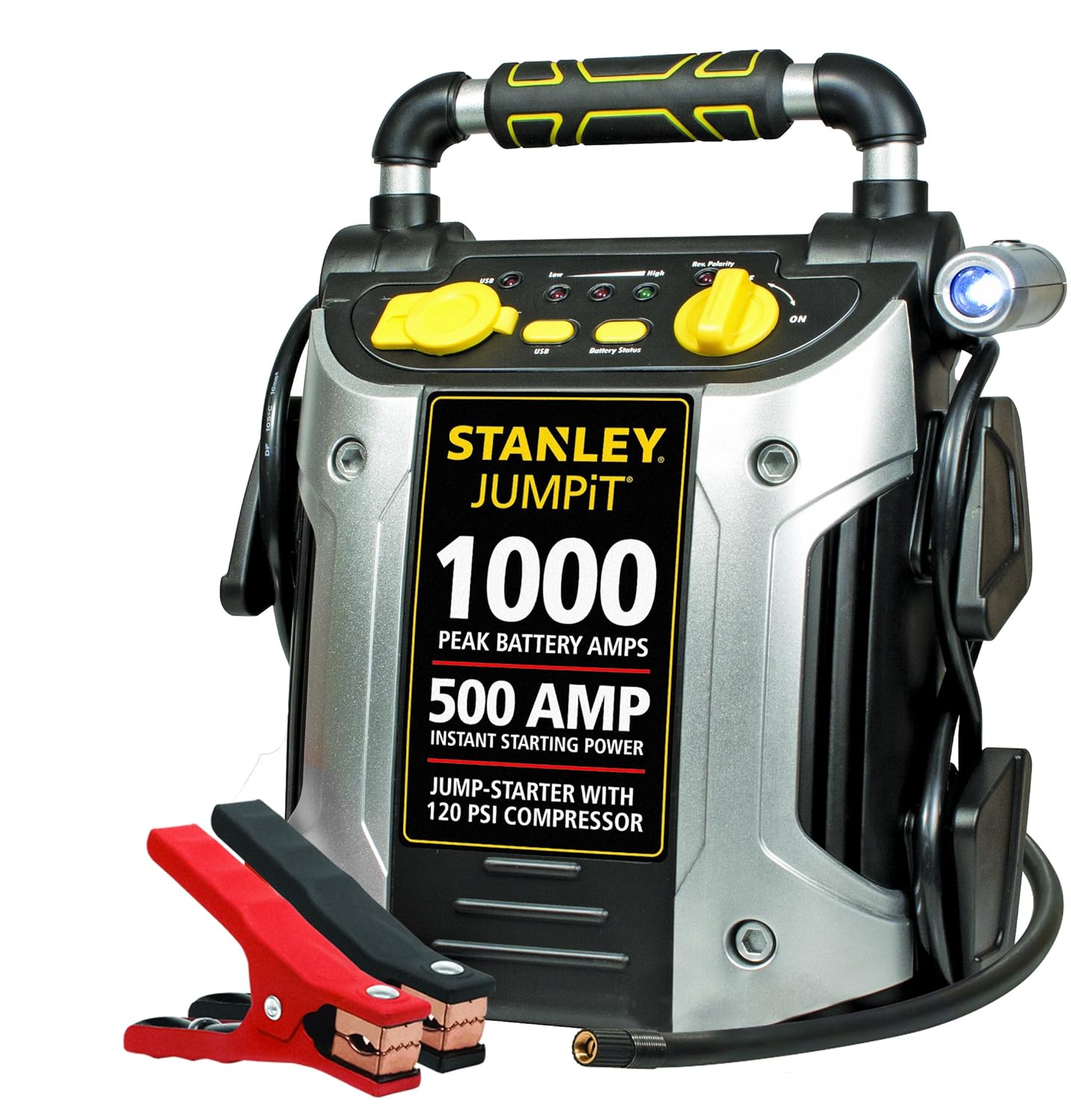
Stanley J5C09 1000 Peak Amp Jump Starter with Built in Compressor
This is yet another reason why I believe a SUV makes so much sense. A bigger car with bigger tires is more likely to have more rubber and hold on better against nails and such. If possible, I think it’s a great idea to get runflat tires just for this kind of situation. If anything, at least check your spare tire, have an inflator (or better yet a charger compressor combo like the one above) and know how to change a tire.
Take care,
FerFAL
Fernando “FerFAL” Aguirre is the author of “The Modern Survival Manual: Surviving the Economic Collapse” and “Bugging Out and Relocating: When Staying is not an Option”.

Thursday, October 9, 2014

Restoring old foggy headlights with toothpaste!


This trick actually helped me a great deal. My car’s headlights where looking pretty bad. The plastic was foggy and yellowish due to oxidation. A little toothpaste and some elbow grease fixed that.
Here’s the four steps to restore a plastic lens headlight to like-new condition.

1)Sandpaper. If the headlight is very deteriorated, cracks, yellowish oxidation and looks pitted, you want to start with sandpaper. Start with 500grit if there’s a lot of damage, then move to 1000 and finally 2000 grit. If the headlight isn’t too deteriorated, doesn’t look pitted and cracked, you may skip this step entirely. Once you removed scratches, yellow oxidation and any pitting, rinse with water and move to the next step.
2)Toothpaste. Any toothpaste will do but whitening toothpaste may be more abrasive and do a better job. You’re looking to polish the lens with the toothpaste, so use a cloth rag since paper will easily fall apart. Patience and plenty of elbow grease may be needed here, depending on how damaged the lens is.
3)Once you’re done, rinse with water and dry the headlight. It should look completely translucent. If you’re not happy with the results repeat step 2.
4)Once the headlight is dry, use a silicone based product to treat the newly polished lens. Any dashboard spray or liquid, even tire shine may work as long as it has silicone in it. Silicone restores your car’s plastic components and creates a film which prevents from oxidation. Spread it over the lens and let it absorb some into the plastic. After an hour or so wipe clean with a dry cloth and buff until your headlights look shiny.

I was about to buy new ones for my car, but doing this saved me a few bucks and it didn’t cost a single cent. The car looked MUCH better with the new looking headlights too, and it illuminates the road better, making it safer to drive.

FerFAL

Tuesday, September 30, 2014

How to Choose a Bug Out Vehicle

This is an excerpt from the chapter about vehicles from my latest book “Bugging Out and Relocating: What to do when staying is not an option”, available in Amazon.

Bug Out Vehicle

The concept of “Bug Out Vehicle” evokes images of powerful 4x4 trucks driven by rugged adventurers as they make their way across uncharted territory. As we analyze this topic more carefully we will understand that the reality is far less exciting and that unless such capabilities are really needed, a true Bug Out Vehicle (BOV) has little to do with the likes of a specialized off-road vehicle.
A Bug Out vehicle is a form of transportation that allows you to reach a safe location during emergency situations. We can assume that for the most part driving will be done on roads and we will only go off-road when there’s no other choice. Still, since emergency scenarios can be very different from one another, the specific vehicle best suited for each will be different too. A person living in a rural area with poor roads and heavy snow during winters will appreciate having a 4WD/AWD BOV, while someone living in a dangerous country with serious crime problems, terrorist threats or war may greatly value armored protection. In spite of the differences, there are certain common traits you want to look for in a BOV:
Reliability: A car is of no use if it doesn’t run. How big it is or how powerful it is, it all comes in a distant second place to actually working. The BOV should have an excellent track record when it comes to reliability. The last thing you want to worry about when evacuating is mechanical problems. All motor vehicles have them, but some have them far more often than others. Having a reliable vehicle will also mean that your car is less likely to need repairs (saving money) when used on daily basis for commuting and driving around town.
Fuel Efficiency: While monster trucks and bomb-proof military vehicles may look great in post-apocalyptic movies, spending a small fortune in gas every month gets old fast and isn’t nearly as cool as you thought it would be when you realize how much money you could have saved with a more fuel efficient vehicle. Poor gas millage is usually the reason why most big BOV stay in the garage while a more efficient car is used for driving around. The theory here is that when disaster strikes, the person will be able to go back home, load up the BOV, and make a triumphal exit while the neighbors stare in awe with their jaws hanging, his sparkling off-road truck blinding them with sun reflecting off the manly stainless steel grill guard. The flaw in this theory is assuming that a person will somehow know when disaster will strike. There’s never a warning. That’s part of what disasters and emergencies are all about. This means that the vehicle used on daily basis will probably be the vehicle you will have with you when things go wrong. Last but not least, fuel efficiency is of great importance because it’s directly proportional to how much distance you can cover on any given amount of fuel you have or are able to procure.
Ease of Repair: The car should be easy to repair. Spare parts should be widely available and not too expensive. The car should be popular enough so that most car mechanics are familiar with the model.
4WD/AWD: If possible, the vehicle should have good ground clearance and 4WD/AWD so as to go off-road or over sidewalks, boulevards and debris should they ever be encountered. It will also make the vehicle more suited for dealing with snow storms and floods. In general, the more suited a vehicle is for off-road, the larger the engine and the more fuel it uses, defeating the purpose of having a car that makes the best use of the fuel available. Because of this reason, light off-road SUVs and AWD sedans may hit that sweet spot where the fuel economy isn’t that bad and it is still capable of limited off-roading if it’s ever needed.

Recommended Vehicles

While other BOV may be excellent choices as well, these vehicles have a proven track record and would make excellent choices.

 Honda CR-V

     Second generation Honda CR-V                    Photo: F.Aguirre

The Honda CR-V was the #1 best-selling SUV in USA in 2012 with 281,652 units sold2. It was introduced in 1995, based on the successful Civic platform and it is still one of the best choices for those looking for a compact SUV. The CR-V has earned itself a solid reputation for reliability, versatility and quality of construction. Used Honda CR-Vs are affordable yet very reliable if one in good condition is purchased. While they are clearly oriented for light off-road use, they are still capable of dealing with realistic bugging out challenges such as snow and secondary dirt or gravel roads. Some Honda CR-V are 2WD, so make sure you are buying a four-wheel drive (4WD) model for better off-road performance. For those considering buying a new CR-V, Honda plans to use a common platform for its remodeled Civic, Accord and CR-V sport utility vehicle, which are slated to go on sale in 2015-173. Honda has a larger model called Pilot that has three rows of seats so as to seat eight people, improved off-road capability and it can wade through 19 inches of water.

Toyota RAV4

        Toyota RAV4                   Photo:Wikimedia Commons- IFCAR

Like Honda, Toyota enjoys a reputation of solid performance and reliability which is the main trait to look for in a BOV. The RAV4 was introduced in 1994 and was the first compact crossover. The Toyota RAV4 ended up in #4 with 171,877 units sold in USA in 2012, behind the Ford Escape and Chevrolet Equinox. The RAV4 competes directly with Honda’s CR-V. Both are popular choices and have similar traits. The Honda CR-V seems to have a better reliability record even if both vehicles are very reliable, while the RAV4 has a slight edge regarding fuel efficiency.
There’s a short body 3-door model RAV4 that could work well for those needing an even smaller vehicle.
Tip: There’s a 2008 Sport model that has a rear door without the externally mounted spare tire. This model uses run-flat tires, which are capable of resisting the effects of deflation when punctured. This can be a great advantage during car-jacking attempts and urban disasters.

 Toyota Hilux & 4Runner
    Toyota 4Runner                  Photo:Wikimedia Commons-IFCAR

The Toyota Hilux is an excellent option due to its legendary reliability. The reputation of the Hilux grew even more after the “Top Gear” TV show episodes where a beat up Hilux survived various torture tests including being washed out to sea, submerged in sea water for four hours, crashed into a tree, hit with a wrecking ball, set on fire and placed on top of a building that was later demolished with explosive charges. All they used to fix it and keep it running between tests was basic tools and supplies without using any spare parts.
The Toyota Hilux has been used all over the world doing all kinds of jobs, everything from farm pickup, off-roading vehicle, police patrol vehicles in South America and even as “technical” improvised fighting vehicles with a gun mounted on them.
The Toyota 4Runner available in USA is part of the Hilux family, sold in Japan under the name Hilux Surf. The fist 4Runner was little more than a camper version of the Hilux. The Toyota Highlander is the mid-size crossover SUV counterpart of the 4Runner. While less rugged, it is one of the most fuel efficient midsize SUVs.
If you need a bigger, more rugged vehicle, the Toyota Land Cruiser is a body-on –frame 4WD that has proven itself in some of the most extreme environments.

Chevrolet Pickups and SUV
Chevrolet makes the best-selling Silverado pickup and the full-size Chevrolet Tahoe which is considered “king of police SUVs”. The lengthened wheelbase model of the Tahoe is available as the Chevrolet Suburban (station wagon-bodied version) which is favored by the FBI and presidential secret service. These are big, powerful vehicles but have poor fuel efficiency and therefore the effective range per gallon during an evacuation scenario is not that good. If you need a daily driver for long range commutes, this can be a deal-breaker too due to fuel costs.

These are just some recommendations but they are of course not the only alternatives. Ford F series are extremely popular and for good reasons. The Ford Explorer and Fusion are also favored by various Law Enforcement agencies across the United States.
Suzuki makes affordable vehicles known for their reliability. The Vitara is a solid and competent light-medium off-road vehicle even if it’s not that good on gas.
It is recommended to stay away from very old cars and restoration projects unless you are very knowledgeable and willing to do most of the work yourself. Like military surplus vehicles, old car restoration projects tend to cost more than what it’s worth, not only regarding money but time as well. If funds are somewhat limited, buying a used car of known reliability will cost less money than getting into a restoration project.
While vehicles that have certain characteristics that make them more suited for emergency scenarios are recommended, the reality is that the cost of driving around, maintenance and especially fuel efficiency, may ultimately decide the outcome of what vehicle you chose. If you have to drive long distances and do so on a tight budget, then a reliable vehicle with a significant priority on fuel efficiency may fit the bill. None the less, you can do so applying the same criteria: Prioritizing popular models which are easy to repair and find parts for and manufacturers of proven reliability. Some good options are the Honda Civic, Toyota Corolla, Suzuki Swift and Toyota Prius. Keep an eye out for Hatchback and Station Wagon variants. These can add flexibility and extra cargo space that can come in handy at times. Some station wagons models add an extra row of passenger seats.
Law enforcement agencies that are on a budget will sometimes chose more fuel efficient sedans and their choices are worth considering. Due to car pursuit training and post-collision reliability, rear-wheel-drive (RWD) configuration is usually favored. RWD makes for a more robust layout which is more agile as well in the hands of an expert driver. The disadvantage is that RWD isn’t as popular as the more common front-wheel drive layout, it’s generally more expensive and there’s some loss of traction on snow, ice and sand.
If you can’t do without 4WD or AWD because of snow, ice or poor roads then there’s sedan models that could work for you. Subaru offers the Legacy and Outback as efficient AWD models.
Useful Links:
www.autotrader.com
www.whatcar.com
These are just some of the cars recommended. If you have another vehicle in mind it is important to research how reliable it is, how common it is, the kind of realistic gas millage you can expect from it and if other owners have found problems with specific models.
Consumer Report is an excellent website for independent reviews. Also check vehicle reliability and fuel economy.
Useful links:
www.consumerreports.org
www.truedelta.com
www.fueleconomy.gov
www.fuelly.com
If you plan on towing a caravan or trailer as part of your Bug Out Plan you need to check the towing capacity of your particular vehicle. Not all cars are alike and even within the same models there are differences depending on the year in which each was manufactured. Your car manual book will have the towing capacity of your particular vehicle. The following websites show towing capacity for different models:
www.onlinetowingguide.com
www.towcar.info
Once you narrow down you choice, read online reviews in forums and boards so as to get a better idea of what to expect from that vehicle and learn any weaknesses the specific model may have.
Read more about this and other topics in my latest book, “Bugging Out and Relocating: What to do when staying is not an option”, available in Amazon.