.

Showing posts with label survivalism. Show all posts

Monday, March 4, 2019

Changes in Survival & Preparedness as you Grow Older

Not a cool flashy video but a relevant one for many of you out there.
 I feel this one went well.

How preparedness and survival changes as we grow older. Not as fast any more, not as strong, how some things change regarding self defense. What supplies you want to stock up.

Leave a comment below and let me know if you can think of others ways in which preparedness changes as you grow older.

Monday, April 3, 2017

(Free) New US Air Force SERE Manual

Image result for sere usaf
The new Survival Evasion Resistance Escape (SERE) Operations Manual is available free online and it’s actually pretty great. It’s a rather large file so rather than opening it with the browser I suggest to right click and directly download the PDF.
AF Handbook 10-644 SERE 21 March 2017
The USAF survival manual has always been a solid survival literature staple, often used as reference or downright plagiarized by more than a few survival manuals out there. This latest version is packed full of good updated info.
Keep a copy in your PC, you phone and flash drive, heck, take the time and print a hard copy of it as well.
Fernando “FerFAL” Aguirre is the author of “The Modern Survival Manual: Surviving the Economic Collapse” and “Bugging Out and Relocating: When Staying is not an Option”.

Monday, February 20, 2017

Happy people: A Year in Taiga


I’m pretty sure I posted this before, maybe last year, but in case you missed it it’s worth posting again.
Happy People: A Year in Taiga goes along the journey of one year with the professional trappers and hunters living along the Taiga river in Russia. These are hardy, no-nonsense old world people. They make a living in one of the harshest parts of the world, one that is at that beautiful and full of natural resources. The skill and resourcefulness they show is admirable.
It’s the second time I watch this documentary. Its four parts, one for each season (as in actual seasons of the year) each lasting one hour. Again, worth every minute of it.


One of the things that stuck with me this time though is that even though I bet they are happy people and some of them probably chose such a life, I sure wouldn’t trade places with them any time soon. In spite of the beautiful natural surroundings you can also see the Spartan way of life, in many ways limited. At the end of the day the trapping, fishing and hunting is done for good old money mostly, and they make rather little of it at that. Clearly being frugal is one of their main survival skills and if applied to any other line of work, likely one that pays better, it’s also understandable that a person would thrive as well.


Again, the skill and resourcefulness is amazing. How they cut down trees to make everything from skies to canoes, driving, navigating, repairing, fishing, hunting, trapping. While these people may be jack of all trades, they sure have mastered several of them as well.
Let me know what you think in the comments below.
FerFAL

Wednesday, October 28, 2015

Why you should get a Second Passport. NOW.


Ferfal,
Thanks so much for your books and blog. They are very helpful for us. We've been implementing what we've learned.
Your article about having two passports http://ferfal.blogspot.com/2015/04/whats-best-passport-and-why-should-you.html strikes me as good common sense. My wife was born in Canada and is now a naturalized American citizen. Most of her relatives continue to live in Canada, despite the election last week, making Canada our #1 international bug-out prospect. We're retired and don't plan to travel to exotic or dangerous locales so dangers and benefits during travel are secondary for us. One of her Canadian cousins is a banker; another is a bishop. Last year, the banker cousin said we could open a Canadian bank account.
After some thought and research, she now resists seeking a Canadian passport because she's concerned that seeking a Canadian passport might cause some people, somewhere, in the American government to hold this against us and cause damage to us later. I agree with her that there are likely some people out there like that but we have no idea how many. I've been active politically albeit at a low level. I've published some articles in print and on the internet that I'm sure are stored somewhere in government archives.
Given your experience and research, what do you think about this concern? What would be your estimate of the benefit/risk ratio of her seeking a Canadian passport? If she does apply, would there be any benefit or disadvantage in applying under her maiden, pre-marriage name?
One of our flags is the "just because I'm paranoid doesn't mean they're not out to get me" flag.
-Bob
.
Hello Bob, thank you for your email and your kind words. I’m glad you find my work useful.
I would get the Canadian passport. The risk/benefit ratio is clear to me. There’s thousands of good, law abiding Americans with dual citizenship going about their business every day and they are not any less American for it. Also, there’s little chance Canadian citizenship will raise any flags. Maybe dual citizenship with some of the more volatile countries in Middle East and such would be more suspicious. As for the benefits you already mentioned opening an account in Canada, that’s on its own a big asset for financial preparedness, and that’s just the tip of the iceberg when you start exploring the possibilities a second passport offers.
“But Ferfal, you and your nonsense. Starting fires with chopsticks, hunting bears with arrows made of Coke glass bottles. That’s what survivalism is all about!”
Maybe in Reality TV shows it is, but not in the actual harsh world out there.
The world is changing around us in ways few people fully understand. From a practical, modern survival perspective, few things are as valuable and as important as a second passport during certain worst case scenarios. I’ve mentioned many times how a gun, passport and money are the three main items to have. If forced to get rid of one I’d get rid of the gun first. With a passport and enough money I can get another gun anyway. Now if forced to drop a second item, I’d rather not have money than lose my European citizenship.
Think of it this way: The cheapest passport in some God forsaken island costs about $250.000. An actually good passport that grants you EU citizenship will cost no less than $1.57 million a pop. That’s per passport, so for the average family of fours its over 6 million bucks! And trust me, there’s people out there that happily pay for it. Now the question is, why? For the very wealthy person, it of course has clear benefits both for living in Europe but also investing as citizens. But what about the average Joe? Average Joe can also make great use of a EU passport. I’m one myself and my citizenship is the last thing I’d give up.
“But Ferfal, Europe? No American in his right mind would move there…”
First, yes, many have. Second, to that I just say you never know. You never know if one day relocating to Europe, or Canada would be in your best interest. The world can change so much in just a few years. There’s just no telling what your personal situation will be like ten years from now, let alone what the world will be like. There’s people that have received life-saving medical treatment for free which otherwise they simply couldn’t afford, thanks to the EU. There’s millions that move all over Europe for employment. Right now with the refugee crisis, hundreds of thousands are looking for a country to take them in. For those that already had citizenship, their only concern would have been getting there before things fell apart too bad.
If passports are literally worth millions of dollars, its just a crime not to get yours if possible. I’ll say it again: You just never now. You don’t know if you want/have to emigrate one day, or if maybe your children or grandchildren will. (That would be my case, it was my grandfather that got me my passport) You don’t know if they may want to study abroad, or get a degree in a world class university for a fraction of what it costs back in U.S.
If you have Irish, Spanish, Italian or any other ancestry, its well worth looking into. These things take time, years, that’s why few people bother but trust me one day you (or your grandchildren) will thank you for it.
FerFAL
Fernando “FerFAL” Aguirre is the author of “The Modern Survival Manual: Surviving the Economic Collapse” and “Bugging Out and Relocating: When Staying is not an Option”.

Wednesday, March 4, 2015

More Great real-world Survival Lessons from Ukraine


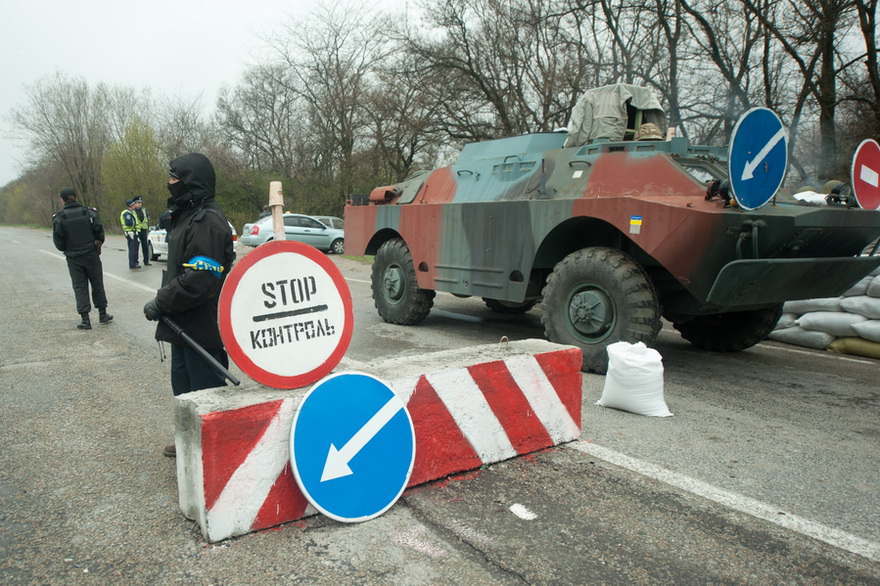
OK, some more great real-world lessons from Ukraine and thoughts being translated from Russian speaking forums. I think some folks here will get an aneurysm when they read about big cities being better, people being stuck in the war zone "because of my farm" and big off-road BOB vehicles not being that great an idea. (off road vehicles are actually being confiscated for official use of either faction, expensive cars are being stolen at checkpoints)
The following quotes have been translated by Sygata from a Russian forum and he kindly let me use them here. I fixed a few typos and spelling errors here and there for clarity.

Bugging in, Bugging out and where to Live
Posted by bofors30
When it was just starting in Kiev nobody was worried. Big deal, more unrest in Kiev. The first concerns started to appear after the Maidan shooting . It became obvious that there was no way back. After the annexation of Crimea it became obvious that we were going to have war. Interestingly, almost nobody believed that (there were no war for 70 years). I did not want to believe it either, but in reality was suggesting that the war is inevitable. After the appearance of armed people in Slavyansk I realized that I need to make a decision now. And after visiting Khramatorsk and hearing constant gunfire I had no doubts left.
First decision you have to make is to evacuate or to stay. If you are evacuating, you need to do that as soon as armed groups of people appears. It does not matter if they armed with shotguns or pitchforks. If the government is not capable of stopping them, that's the end. If you react early enough, you still can sell your house and some of your belongings. The later you go, the less things you will be able to sell, and the less things you will be able to take with you. The earlier you go, the easier it will be to settle on a new place.
But, if there are roadblocks set, it is too late to evacuate. Especially horrible there were groups of cars with signs "Children", that tried to pretty much storm through roadblocks under gunfire. There were a lot of those, but a real spike was not when the shells first fall onto our city, but when the city got blocked there was nowhere to go.
Later, about a month after that, there were the same thing going in the opposite direction, when people who thought it will be over in a month started to go back home. But it was far from over.
Posted by valdem01
Usually first evacuation spike is after the place is shelled for the first time. And in the summer people usually were going south, to the beach. In reality, the real combat could have started a month or even more later. By that time people had no money left, and were forced to come back home. Those people are the most scared, they would panic even if an explosion is far away. You also need to take into account the location of the city. City on the single main road could be blocked in a matter of hours. Bigger city would always have an escape route.
Don't think you can get away using back roads - usually there are patrols on most of them and on nearby altitudes and any movement there could be treated as enemies Sabotage-reconnaissance group. And now there are mines everywhere. The safest way out for the family is through the main road and road blocks. A lot trouble comes if you have older relatives - they don't want to go even to a close relatives, but only until shelling did not become constant. When the walls start trembling, they what to go anywhere, but by that time it is impossible.
Probably the best prepping for situations like that is having some money in some stable currency. You can buy what you need (especially in big cities) or you can use those money to settle in the new place.
Posted by Lastmad
What's better - city car or 4 wheel drive... The thing is, even outside of ATO zone you go only through roadblocks. Of course, if you have a 4WD, you can try to ride through fields or forest roads. But, first of all, if any military sees you that would try to stop you or just will start shooting, either side, because there are a lot of Sabotage-reconnaissance groups. And second - the are mines. And there are a lot of them, and they set by both sides without any maps, so that their own troops get blown up.
Posted by Kolhoz
For me everything was clear starting February (2014), and I started preparing. But I did not believe into a full blown war, even though I have prepared. I still have some left - canned food, spaghetti, sereals, bataries, radios, etc.
There are no jobs, at all. Government workers (teachers, police, doctors) are working pretty much for free. I have heard of people getting a can of canned food ant two teabags for a week of work.
I am not leaving because of my farm, and the farm gives me hope for more or less normal life in any case.


Bugging in

Posted by bofors30
If you live in large apartment building, you have no choice but to move to your relatives, or look for abandoned house. In the apartment building everything against you:
Height provokes hits by shelling, sometimes unintentional,
Overall condition of such buildings is not ideal (couple days ago because of the shell that hit an entrance stairs from first to third floor collapsed in the 5 stories building),
Heating (Critical in winter, and if central heating pipes froze, thats unfixable)
Water (Filtration station stopped countless times)
In the house you can concentrate on solving those problem and solve them much faster and simpler then in the apartment.
And the most important thing - the shelter nearby. Running to a shelter from 8th floor under unexpected shelling is useless, but covered dugout in the garden is 80% of your survival. We could not make it in our garden because of ground water, so we used kitchen made of concrete blocks, which saved me when 122mm gift landed in my garden.
Water - your well, or find out where is the closest one. Tap water, if working, is horrible quality, comparably with melted snow from the outside.
I have gas heating and wood stove. Gas was out couple times, but in general it was stable so far.
Posted by Lastmad
Windows... At first, big roll of duct tape was waiting for its time, than we put it on windows, now there is a huge market for rolls of plastic (it just disappeared, and brought here with humanitarian aid). In Donetsk people put Styrofoam wrapped into plastic food wrap in windows instead of double glazing.
Posted by Kolhoz
I had a brick house. Pretty solid, holds on against bullets and small RPGs. Widows covered by bricks, even without cement hold on surprisingly well.
Here is my house. Look at the window on the right on a second picture - the bricks are still intact.

People asked where to live better - suburb, city or village. I think the best is a house close to the middle of the city. All the suburb had combat, in the remote villages were no laws, but in the middle of the city there is always some sort of government.
I am planning to build a new house instead of the old one. My wife told me do whatever you want, but I want a bomb shelter. I am going to build a deep (dual purpose) basement at least 2 meters below the ground. 4 ventilation holes (2 in 2 out), 2 entrances - from the street and from the house, electricity, would stove, put couple bags of charcoal. Make shelves, so that they could be used as beds if needed. Put some shovels there as well.
Posted by Dr. NeWatson
My sister s house in Gorlovka, 2.5 stories, pretty good, was not touched by military. Its a war, tactical consideration prevail against greed.
Posted by Vladar
Tank could break through the gates of your house without opening them if it will improve its position.
Separately standing big house would be a taken for the needs of commander.
When I was walking to my parents house (about 30 min walk) I would attach a label with my name and tell the neighbors where I am going. There I would walk house - well - toilet (I used their toilet to save some water)
If Grad hits near your building - it is not that bad except if it got directly into your window or into the roof. The most dangerous are the fragments. If it hit right under the house foundation, it just breaks the close by windows. It is much worse if it hit the tree or a an electric post - than you would see the fragments trace all around the house front.
Nobody would put bricks or sand bags on the windows, but I put foam pillows there, and slept for two month in the hallway. The basement in my building is very narrow, but I visited my friends. They live in an apartment in a 3 stories building with 2 apartments on each store. they had huge basement, and 3 families from houses without basement lived there. About 10 people lived in a room about 13x32 feet, for about 3 month.
If my neighbor in his apartment keeps large propane tank, I would kill him, and nobody would say anything.
IMPORTANT!
If you leaving the house for a day in such situation throw away everything from your refrigerator. You may come back in 3 month, and door to your apartment will be broken by neighbors because of the smell. If the gas company would say that the gas would be given to the building if all apartments checked for leaks, or if the water is leaking and you did not left the keys to the neighbors - the doors would be broken.

Bug out bag

Posted by Kolhoz
I lived in suburb called Metallist. At first we started to hear gunfire, that tanks and armored vehicles started to come into the neighborhood, first shelling came. For some reason we were still sitting there, nobody wanted to leave the house. And last 3 days we could not anyway. Finally 2 heavily armed guys showed up at my house and said they are going to use the attic, and it would be safer if we move. they gave us 10 minutes to leave the house, and this is were my bug out bags became useful.
I was planning to have 4 Bug out bags, fist one universal - medicine, roll of plastic, rope, some water, second one expanding the first one -kitchenware, warm clothes, etc., but never got time to complete bag #3 and #4.
So we threw into a car whatever those bags and whatever we can find in 10 minutes and under shelling left to a farm on the other side of the city, were we had only unfinished barn. Until now we drinking tea with metal caps from bugout bag.
Electricity

Posted by bofors30
The problems start when electricity goes off. And generator won't save you. The stores are first to close, phones and internet are not working, businesses are shut down.
Lastmad
Generators are good, but they are confiscated by both sides for the needs of roadblocks, so the noise is your enemy. I "lost" (meaning stashed not to be found) 3 generators, and left only a small 1 kW one.
The thing is, even a low noise generator, when everything dark and quite makes enough noise to be heard. So, I turn it on only during the day, when it is noisy outside and I am sure there no patrols. I charge 12V car batteries, and support my refrigerator and freezer from being completely defrosted.(refrigerator can go 2 days and freezer 4 days without a need for electricity).
Inverters (250W, 350W and 800W) means I can get 220V (220V is standard for Ukraine - sygata) in complete silence. For me that means light, TV, radio and everything else were lower power 220V is needed. One thing, if you have light, cover your windows unless you want some gift to fly in.
Some neighbors are running small generators in the apartments, putting a hose on the exhaust and putting it into a window, covering the generator with the cardboard box and mattresses. The run time is short though because of the heat. I really think small (0.75-1 kW) generator is a must.
Posted by Vladar
We lost power a bunch of time for 1-2 days and couple for 3-5 days.
Power would jump from 15V, that became normal at evening (standard in Ukraine 220V) to 170-180 during the day. Surge protectors is a must. When the power is low, most washers would not even turn on (and at that time you will get water once per 3 days, 5pm-7pm). Refrigerators may work on 150V - 180V but sometimes compressor would overheat. Microwave won't work on low power and charger won't charge the phone.
You need to plan your lighting for 1-2 weeks of independent work. Car battery - LED - Converter 12V to USB. Look for rapid chargers with 12V input, you don't want to sit there for couple hours and wait until 2A charger charges 10A powerbank.
For not covered lighted window you can get a shot into that window from AK. Prices for batteries and candles grew several times. Powerful flashlight is not needed and even bad for you. The one I used is Akoray k-106 with AA battery, put on a min. and Tank 007 as EDC.
The most useful flashlights were two I had with motion detectors.
Posted by Valdam01
I am hiker and out of all my equipment solar panel with battery charger proved to be one of the view really useful items.

Clothes

Posted by bofors30
It is funny now to read comments from "experts" pointing out that camo jackets and outwear is pretty common and does not surprise anyone now, so after SHTF it would be even more common. They would say that half of population were they live are using woodland or something similar, and that this is not a uniform but just regular clothes.
It was just like that here. But at certain point it disappeared. Even civilian colours. Only military and separatists are wearing those. For the olive M65 jacket I almost got arrested (they thought I am an artillery spotter or something like that). Any green colored clothes stand out like a naked prostitute in the middle of church.
Posted by Lastmad
Camo and any military styles clothes you can wear only if you are in the military. For civilians it is better to have jackets from Gas or another utility company uniform - they they seem to treat you better on the roadblocks and you are not drawing attention.
valmad01
If you have anything on you that even remotely looks like military you will draw unwanted attention with unpredictable results. If you wear ballistic vest, in the best for you case it will be confiscated for the needs of the army and your house will be searched just in case.
Comment by FerFAL: I’d rather get my vest confiscated if found rather than get killed by bullets or shrapnel but I do see the common theme: If you look “military” in any way, either faction will assume you’re an enemy. The best thing to do is to look as normal as possible, and I for one would get rid of any suspicious material before going through a checkpoint. Great point about camo. Camo only makes sense if you are involved in the conflict. Even olive green color can be problematic. We go back to the gray man approach: Be smart, look normal, wear normal clothes in darker, subdued colors and tones like black, dark, gray, dark blue, so as to not attract attention but not look “tactical”. Even my favorite pants, the 5.11 taclite, would be suspicious for a soldier at a checkpoint with a good eye. Same for tactical footwear. I think it’s a good idea to focus on high end, high quality outdoors gear. These tend to be as good or better than military style clothes and don’t look as tactical. In fact, many special ops prefer premium outdoors gear when it comes to clothing and footwear.

Phones

Posted by Lastmad
On a street in your pocket you should have an old black and white Nokia, with a good battery. Definitely without memory card and camera since those will cause a lot of troubles on roadblocks. The more you can go without charging it the better. GPS is working only in some places, mobile network often goes down, Having SIM cards from multiple providers helps, but if found causes questioning on the roadblocks.
Phone that only allows to call or send SMS is much better if you stopped at the check point. And there is a lot of those. Also, people are charging the phones in groups, for example by the whole building, and if you don't have a common charging connector you may not be able to charge it.
Every smart phone or a tablet is a reason for special attention at the checkpoints, roadblocks or by patrol. They would go through you pictures and may or may not give it back.
God forbid you are calling or just holding the phone near your ear when driving through roadblock. Minimum you will be beaten up and the phone confiscated, maximum - go to another world, but only after you would proof that you are not an artillery spotter or a scout. Not many people in Donetsk are talking on the phone while walking the streets.
Posted by Vladar
Wired phones worked while we had the power. Then they had couple weeks of generate fuel worth. Battery on a local station lasted 1 hour.
For the streets only the simplest phone without camera or anything else. In a contact book only Mom, Dad, etc. (unless you want to explain who are each of those other people) For the record in your contacts with inappropriate location code you could disappear for couple days. Smartphone will be checked thoroughly - social media accounts, email, pictures, etc.
You may spent 30 minutes explaining who you wrote what and why.
You need to have a smartphone though - because of the internet. Viber was working better than SMS. There were cases when phone would display "Emergency calls only", but Viber was able to send and receive messages. The only thing you need to buy SIM cards in advance. The starting pack for "Kievstar" was going for 100-200 hryvnas (regular price - 15 hryvnas)
One advice - you need a headset. When you hold a phone in the hands it is not finding connection well, but with bluetooth or wired headset is more convenient for redial, you just push a single button and can redial multiple times. I would tape my phone to the top corner of the window and and would dial while lying in the hallways floor. Or would attach on a tree, where there is a connection and dial standing nearby.
Military on both sides usually willing to help you to charge your phone. In some cases, if the connection present only when you on altitude, that would have somebody standing with you listening to your talk.
In some cases phone would be able to dial after 10-30 retries, or after midnight. SMS could take 2-3 days to go through, and will take 20-60 tries.
Also, keep in mind, when connection is bad, the battery goes down much faster (couple hours).
In the event of shelling don't put info to the internet for couple of hours, especially if it has GPS tagging, since it could be used to correct shelling.

Radios

Posted by Lastmad
Radios... you better off leaving them home. And at home I "lost" (meaning hid - sygata) anything decent from Yaesu and to scanners like Aor and Icom. The only thing I have now is Baofeng, that is good enough for scanning and I know I can throw it out without regret if I have to.
In summer a cab I took was stopped at the checkpoint. The cab had a radio, driver showed a copy of a license and was let go. In fall in the same situation the radio could be ripped out of the car and you beaten up(as part of interrogation), especially if don't have the papers). Most cab drivers now using android smart phones.
Posted by Dr. NeWatson
For carrying weapons you may just get beaten up and weapon is confiscated, but carrying radios, binoculars and and complicated looking electronics is just a sadistic way of suicide. And it is wholeheartedly supported by locals, especially after couple missiles hit near the places giving out humanitarian aid.
Posted by Kostikfraerok
In summer time we had a very heated discussion on the roadblock and almost got beaten up for the radio in the cab we took.
Posted by Vladar
The only use I can see for the radios is after close explosions to check on relatives living within your radio range. Thats it! Do not talk about what got hit by missiles, were you can buy bread, etc. Never let the neighbours see radios, you don't know when they will tell about it. Like on the roadblock, they can say: "Hey, my neighbour has the same radio".
For communication I would have prefered a long range phone, like Senao
Posted by Kolhoz
The main goal of the searches on roadblockes is finding radios, weapon, optic sights and other spy equipment. If found, in the best scenario it confiscated, you lightly beaten up. After that you are interrogated and based on the result either arrested or taken for questioning.
None of the HAM operators I know got in trouble.
Friend of mine lives in Schast'e. His house is covered by HF and UHF antennas. Armed forces showed up in his house and offered him a job. He refused and they left him alone.
When my house was searched, here is the radio setup I had:

I just showed my license and there was no problem
In September I asked in commandant's office how to extend the papers and register the radios. They told me to sit quiet and not draw attention. And promised to confiscate at the first sign of trouble.
Yesterday we were hit by Uragan's ( http://en.wikipedia.org/wiki/BM-27_Uragan ). After explosions, like usual, ham operators started to talk, we figured out were the explosions are, so I was able to call my friends to check on them. We also determined what type of missiles was used. We also listening police and emergency teams.
Today, I have heard how my friend (70+ years old) talked on the radio with a person from the other side. We figured that out by him mentioning ts-2000 ham radio in a car and the fact that he is making kebab.
One of the ham operators remembered he heard the same guy in the summer. Two other guys started to turn directional antennas. So, basically in 3 minutes we (as a group of HAM operators) identified that person and his location to a 600 yards radius circle on the map.

Comment by FerFAL: Great points on phones. On one hand any smart phone will look suspicious because of its intel ability. The basic phone without camera and no one in your contacts will be checked less thoroughly. Personally, I’d be VERY distrustful of a person with a phone with no contacts other than mom, dad, girlfriend, sister. That to me has spook written all over it. But the point is still valid: They will look into your cell phone, they will check your facebook app and see what you’re up to. You better be pretty neutral and have pictures and comments that reflect that.
At the same time, you need a smartphone so as to go online, talk, connect with people maybe even work or make bank transfers, buy plane tickets. So, you need it, but you have to be careful of what they’ll find if checked and you have to be ready to lose it. My solution. Have both, have a smartphone ready to be checked and have a more basic phone. If it comes down to it, you can try to reason with the soldier and get him to let you keep at least the basis phone. Maybe your son or one of the kids can have it as their personal phone, which would look even less suspicious.
About the radio guy being offered a job. I’m sure that’s exactly what happened, but his position is FAR from ideal. They may come back later and not ASK but they’ll you that you now work for them. Then again, enemy factions may think you are working for them and shell your position or get you with sniper fire. Is the house well placed, with radios, a nice vegetable garden and looks well put together? That’s called a command center my friend, and one side or the other will eventually end up living in it. People in strategically positioned houses, or particularly good houses or structures to set a barrack or command post are either asked or forced to leave.

Medical Care

Posted by bofors30
If 911 is coming, they don't have any medicine with them, Pharmacies are empty, they don't have even common painkillers. If you have chronic disease, your chances are not good. Hospitals are working, but doctors are without salaries. Good doctors are gone (fled the area), the ones that left are not treating you well. Trauma and surgery department are overflown.
Military goes to regular hospitals, doctors just assigning the medicine, getting it is up to you.
smith_SVP
In February we decided that we should keep enough medicine to last for my grandma for 6 month. I also got contact lenses for myself enough for 4 years.
Posted by Kolhoz
It became a bit better with the medicine, but still most of what pharmacies offer are herbal teas.
Posted by Valdar
Tranquillizers are a huge deficit. Most pharmacies merged their supplies. One pharmacy was delivering medicine (patients had to pay for it) to people with heart conditions, diabetics, and other chronic disease. In September only most expansive medicines were left in pharmacies.
My friend had to go to the dentist, got into the chair, and at this point there was a power outage for the whole day.
In the hospital there were turning on generator for 10-30 minutes an hour, as they said to charge equipment in intensive care unit. But the power was gone multiple times for up to 5 days.
Ketanov(ketorolac) and similar painkillers disappeared among the first, also Omez (Omeprazole), tranquillizers, antiseptics, bandages. Some specialized medicine you were able to find because pharmacies merged their storages and most people with chronic disease fled.
Posted by Dr.NeWatson
All medicine with unchanged form and colour considered good. But without real need we trying not to use it on kids, elderly, pregnant, etc.
So, here is a real life problem:
You have a patient with pneumonia and collapse, and you have
1. AI-2 ( Russian military first aid kit, http://ru.wikipedia.org/wiki/АИ-2 ) of unknown year with tetracycline and sulfadimethoxine, that looks intact, but cannot be younger than 1992 (they stopped making those)
2. Ampiox ( this is oxacillin and ampicillin, http://www.ndrugs.com/?s=Ampiox ), dated to year 2000.
3. Ephedrine manufactured in 1974.
What would you do?
We injected ephedrine, tried microdose of ampiox to check for allergy and injected it when no reaction was found and used sulfadimethoxine. Tetracycline was excluded because of the age and possible toxicity.
For pain prior to hospital we are giving Ketonal/Ketorol + Butorphanol/Nalbuphine. Hospitals have Buprenorphine and Promedol. Large burnes are handled with local anaesthetics, but our hospital does not have burn department.
For gunshot wounds we setting drainage. Fasciotomy is not used because of the low skill level of the surgents and most of them have not even read battlefield medicine guide. Your body encapsulates small shrapnel just fine.
Tetanus injection should be made to all wounded, and we trying to enforce this, but in reality it may or may not happen.
Also for wounded we use injections or IV with contrykal or gordox. If there is a wounded enemy soldier, I will not treat him unless I have a direct order.
I am against the use of tourniquet by non-medics. Especially because a lot of people when facing the choice to die or become disabled are choosing to die. Long and tight elastic bandage will press a small/medium blood vessel same good and much safer. ( with tourniquet neuromuscular injuries are common). Major blood vessel injury is equal to amputation, nobody would bother making blood vessel suture. From my point of view two tourniquet per group - one carried by medic and one by commander or by sniper is more them enough. Looks like Sweden figured this out, their first aid kit has a semi-elastic bandage.
My friend almost committed suicide - he thought he lost a leg, but then he figured to look, and saw it intact, he just didn't feel the leg because of the tourniquet.
Looting/Confiscations by armed forces
Lastmad
Imagine the suburbs of the city. The following group enters: pickup track L-200 with large calibre machine gun, two sedans with no tags but some armed forces markings and two large KRAZ.
A group of 20-30 people with guns wearing balaclavas gets out and goes to closest house.(is it random or by someone tip is different question). The owner opens, and they asking to see the documents of everyone in the house and permission to look around the house. In the first house the owner had no problem with that, and they did not even go into the house. In the next one the owner shows the documents, but refuses to let them to search, and as the result that owner is on his knees with a gun to his head and the house is turned inside out. And it goes like that on the whole street.
Special attention payed to the people without documents, or if the address in the document does not match this place. If you are a citizen of another country, depending on a country you could be detained.
A lot of thing if found, confiscated: weapon, regardless licensed or not, radios (after interrogation - why do you have them), generators.
If camouflage clothes found, balaclavas, hunting/military knives, etc, they are confiscated, and you need to prove to them that you are not an enemy soldier, and to yourself that you are not a moron. Also, if found, gold, worm clothes, gas canisters, flashlights, etc.
Posted by Vladar
Abandoned house will be looted, may be even by neighbors, that later will blame military. If a non regular army comes to a village, they would loot houses of local officials and business that support the other side.
If the village is on a way of combat, some forces are moving in, some retreating, both would definitely stop by to get something.
If the village is under control by the same force for a long time, the only not-abandoned houses looted will be the once of the people suspected in collaboration with another side of the conflict, and that would be as a "house search".
If military occupies some business building or a factory for more than 5-10 hours, all safes are going to be open.

The sign on the following picture says "Will look after you house during the war". This is actually very useful. A lot of people left thinking it is for 1-2 month, and no cannot come back. People looking after the house may fix windows or heating, mail you some things you left, etc.
If some store gets hit, it considered open and is looted. In some cases some good people were taping the process and gave the recording to the owner, but nobody was punished.
Home improvement/construction stores are either looted, or closed by local government (declared a strategic supply reserve)
  It goes without saying that not all situations are the same and what works well or makes sense in one specific case may not in another. Survivalism has no black and white answers. In fact, the key to survival is adaptability. Learn and adapt. Adapt the things you learn to your specific case. Having said that, by far the best source of information to learn from is real world events, other people's real experience. Too often we hear about survival “experts” telling others that things will go down this way or another and when you confront them with FACTS, things that actually happened, that actually went down a certain way, the answer usually floats around something along the lines of: "...yeah... but it would be completely different here, cuz this is 'Merica!". And if you ask why is it that they rather not learn from things that have actually happened, rather than prepare based on what they see on "The Walking Dead" the answer doesn’t make much more sense and it goes along something like "... cuz... this is 'Merica!"
Don’t be that guy. Learn from these experiences, from what others have gone through. It may not happen exactly the same but there are a TON of similarities, there always are. This is much more useful than wasting time debating the survival lessons seen in some TV series.
FerFAL
Fernando “FerFAL” Aguirre is the author of “The Modern Survival Manual: Surviving the Economic Collapse” and “Bugging Out and Relocating: When Staying is not an Option”.

Thursday, November 6, 2014

Life after an Economic Collapse: The same… only Worse Part I

Argentina’s economic collapse is a valuable case-study because of its unique circumstances. There are countries that have existed in poverty for thousands of years, where most of the population has lived in awful conditions their entire lives. While that is tragic, it does not represent a good example as of what happens to a developed nation, both economically and socially, when it collapses due to numerous factors both local and foreign. When the world shuddered during the 1929 financial crisis, Argentina had the world’s 4th largest GDP. The country had a strong and well-educated middle class, respectable local industry, an enviable amount of natural resources and agriculture which earned it the nickname of “granary of the world”.
I have often written about how life after an economic collapse is not what most people believe it to be. There’s no fancy bugging out into the woods, there’s, zero, zip , nada use of most of the equipment that is so often advertised as essential to survival. There’s no camping, no hunting, and no epic battles against zombies or colorful Mad Max type gangs.
But then again, what IS it like? What Discovery Channel and other reality TV show “experts” tell us is not it. But what’s it like to live, struggle, work and raise a family? What do you see happening during an ordinary day? What concerns people? What works, and what doesn’t? The short answer is in this article’s title. It’s the same, only worse. Nothing good come out of it. Sure, you can say that surviving a plane crash brought your family together, or getting over a disease made you appreciate life more, but at the end of the day you don’t wish either one on anyone.

Crime

Crime has always been a problem in Argentina but you could most certainly see a drastic change after 2001. It used to be that everyone locked their doors at night but some people had alarms in their houses, some had fences and in even fewer cases some houses had burglar bars on the windows. After 2001, you quickly saw home security becoming more of a concern each passing month. A couple years later it was hard to spot a house without burglar bars on the windows. Those that didn’t upscale their home security ended up paying for it. On the streets it was the same thing. Before 2001 everyone knew of someone that had been mugged, maybe someone that had been carjacked or even an incident of home invasion in the neighborhood once a year or so. By 2014 home invasions are practically a daily occurrence in each neighborhood and it’s almost impossible to find a person that hasn’t been a victim of crime in the past decade. At the very least, people had a cellphone or a purse snatch. It’s common to come across people that have been held at gunpoint and carjacked not just once, but two times or more in recent years. Every person I know has had a family member killed or at least seriously wounded during a robbery. By 2011, Argentina was the country with the most robberies in Latin America (UN data), with 973,3 robberies per 100.000 inhabitants. Mexico came second with 688 robberies. Brazil ended up in third place with 572,7.
http://www.infobae.com/2013/11/14/1523693-para-la-onu-argentina-es-el-pais-america-latina-mas-robos-habitante
It becomes a part of life, you just deal with it and accept, yes, that’s the word, you “accept” this as an inevitable part of life as much as you accept the possibility of getting sick or being involved in a car accident. When crime happens so often and it becomes such a high risk factor you have two choices: You either accept it as a part of life and chose not to worry beyond some basic common sense safety measures and carry on with your life, trying not to worry about it anymore than you worry about getting hit by lighting, or you do something about it. You try to improve security in all aspects of life as much as possible, home security, armed and unarmed self-defense, learning defensive driving techniques, taking as many passive and active security measures and precautions as you can. You carry weapons to defend yourself. You learn how to use them. You make yourself as unappealing as a potential victim as possible. You avoid dangerous situations and places. Basically you learn to live in a constant state of alert. While the second path is more likely to keep you safe, it’s also the more stressful one. I don’t need to tell you which path most people end up taking.

Social Instability

As soon as banks close their doors, the protest started on the streets. First in was against banks stealing people’s money. Then it was against the politicians that allowed it. During the riots of December 19th and 20th of 2001 cars and buildings were burned down and over 30 people died in various incidents across the country, but once the dust had settled we understood that the rioting and civil unrest that we simply never saw before to any considerable extent was now here to stay. Riots, roadblocks and protests were part of everyday life. Sometimes they were violent, sometimes stores got vandalized. The inflation, unemployment and in many cases true hunger didn’t help. At times it was just a matter of a grocery store giving up some food to avoid being looted. Sometimes, when it was really just about a few hundred people showing up half begging half demanding food, sometimes that was enough to avoid getting a store looted. Most of all it was a matter of waking up every day, checking the news to see if there was any ongoing protest or any planned area of conflict and find alternative routes to wherever you needed to go. If you got caught my a mob it could turn ugly, but in general it was more of a nuisance, knowing you would waste a couple hours of your day just to cover a few miles across the city. Strikes also occurred with frequency, sometimes unannounced. You’d lose buses, trains, even flights because of this or that group going on strike. If you had a child in a public school, you could expect him to lose up to 30% of class days due to one form of strike or union problem or another. Public offices were particularly prone to this type of problem. Between strikes, those days when the network went down, or there was no power, combined with their natural incompetence made any paperwork involving public workers a true nightmare. You need to have your car’s annual check or test? No problem. Be ready to lose your entire day for something that shouldn’t take more than 20 minutes in any half civilized country.
This would become a common pattern in Argentina. Thing’s “sort of” work. You have cops in Argentina, but you better know how to defend yourself. You have an electric grid and you pay your power bill, but expect to go 2 or 3 days a week without power in summer. You have tap water, you sure pay for it, but only a fool would drink it without filtering first.

Power
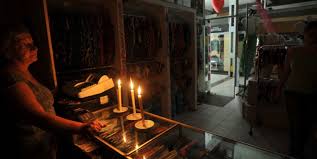
Electric power is one of the best metaphors of the situation in Argentina: It doesn’t work when you need it the most, and even when it does it’s of awful quality. When you do have electricity, it’s usually of lower voltage than the standard 220V. Sometimes it’s so low air conditioners and microwaves won’t even work, and that’s when you have power. During summer time when electricity is in greater demand because of the intense South American heat, expect frequent outages which may last days, even weeks in some cases. The reasons for these problems are numerous. Because of poor regulations and corruption companies rarely kept up with the necessary infrastructure updates. This only got worse after 2001 with the devaluation and price increase of imported supplies. Power has been subsidized in Argentina for several years now and the price has been kept down artificially, making the problem of lack of investment even worse. During summer time it’s common for transformers to blow up. There’s also the constant problem of cable theft due to their copper content. Because of the lack of investment in power generation, along with thousands of millions spend in projects where the money disappeared without a single brick ever being laid, Argentina was forced to spend 9.500 million Usd importing energy in 2011 alone.
If you expect to have power, you better get yourself a generator. Without one most stores wouldn’t be able to stay open for business. A voltage elevator is also a necessary investment so as to compensate for the low voltage “dirty” power that at times is useless.

Communications

Something similar happens regarding telecommunications. The lack of investment while adding new customers means the network is oversaturated. Operators in Argentina work at 135 MHz, which is half or what they use in Chile and one third of what’s used in Brazil. It is estimated that over 60% of the calls experience problems, from lack of signal to dropped calls. Cell phone communication falls, again, in that gray area of post-2001 Argentina: they kinda work, sometimes. You can pay for 3G connection, but getting it is a matter of luck.
Floods
The problem is again, lack of investment and infrastructure. It also comes into play the enormous amount of litter on the streets which clog storm drains. Storm drains are also made of pretty heavy metal so… remember the inflation problems, along with crime and unemployment? Storm drain grated inlets are usually made of heavy iron. That iron fetches a nice price when sold, so these where stolen all over the country. Everything from statues, historic plaques in monuments and even doorknobs have been stolen because of the price of metals.
If flood prevention investment is a problem in developed nations, you can imagine how bad it gets in a place like Argentina. Without hurricanes or even serious storms, just heavy rain is enough to end in tragedy. In April 2013 a flood in the capital city La Plata claimed over 100 lives. As years go by and the infrastructure is not only not upgraded but deteriorating, floods are yet another problem people in Buenos Aires have to deal with.

Transportation

Driving around Buenos Aires isn’t for everyone. Roads are in awful condition, people literally drive like maniacs and if that’s not enough, you also have to worry about getting carjacked or mugged in a red light. People from developed nations that try to drive in Argentina usually give up after the first attempt. They can’t understand why no one respects basic traffic rules, why they seem to cut you off for no reason, let alone roll down the window and insult you.
Yet again, lack of investment and corruption is key to explain why this happens. The money that is stolen isnt there to put up traffic signs, fix roads or build more of them. There’s no investment in driver education either. More often than not people get their license by bribing someone rather than actually doing the test. In my case, it took me all day to get my driver’s license simply because I refused to pay a bit extra to get it right away. In each stage, the sight test, theory test, practical test, in each one I had to explain that no, I don’t want to “pay” to get it quicker. I must have been the only guy that day that went through the entire process. With uneducated drivers you can imagine what kind of people are behind the wheel. Add to that the overall poverty level and poor condition of the cars on the streets, and combine it with the level of stress and violence the entire population is subjected to.
In the case of public transportation it is again, far from ideal. Train accidents with fatalities keep happening for the same reasons: Corruption, lack of control, lack of investment and politics getting in the way of doing things right. Traveling in train, subway or bus during rush hour lets you experience what a sardine feels like when it’s getting canned. The service is overall unreliable. Busses and trains break down often. There’s also strikes and remember those protests and road blocks to complicate things further.
FerFAL
Fernando “FerFAL” Aguirre is the author of “The Modern Survival Manual: Surviving the Economic Collapse” and “Bugging Out and Relocating: When Staying is not an Option”.