.

Showing posts with label blackout. Show all posts

Friday, December 29, 2017

Back to the Dark Ages: 3 Months later half of Puerto Rico still without Power

Puerto Rico Hurricane Maria

 Puerto Rico Hurricane MariaPuerto Rico Hurricane Maria
Hurricane Maria sent Puerto Rico back to the Dark Ages and three months later half of Puerto Rico is still without power and struggling badly. What’s it like to live without power, how people cope and what challenges they face.

Like our previous post, the linked presentation below is also worth the time.
Puerto Rico, back to the dark ages.
Nothing like hands on accounts of actual events to understand for real what SHTF is like.
Notice that in general the areas that struggle the most are the more isolated ones and the ones further away from the main power grid. It is logical that these would be the ones where it is harder to re-establish power for. This contradicts the common “preper” advice of living away from main urban areas.

In the real world there’s no easy, black and white answers. The reality of such events is far more complex, what can be a benefit in some aspects can be a big handicap in other areas.
The trick is to know how to balance and prepare accordingly for whatever compromises you decide to make.

Have a great weekend folks!

FerFAL
Fernando “FerFAL” Aguirre is the author of “The Modern Survival Manual: Surviving the Economic Collapse” and “Bugging Out and Relocating: When Staying is not an Option”

Tuesday, June 27, 2017

6 items to have for long term power outages


List of Items
1)1)Flashlights:
Thrunite TN12
Lumintop Copper Prince
2)Batteries
3)Gas Stove
4)Car Inverter
5)Solar Battery bank
6)Kerosene Heater

Tuesday, May 2, 2017

Just spent Six days without Power: 12 things I learned


So one of those once in a lifetime mess-ups left us without power for almost a week. One guy messed up and didn’t present the paperwork he was supposed to, the power company did its thing, then fixing it all with a weekend in between was even more time. At the end of the day we were left without power until the mess was sorted out.

I’ve been without power for a few days before. In fact in Argentina power would go down almost every day for a few hours some years ago, especially during summer. I’ve been a day or two without power more times than I can remember and even longer too. Can’t remember if I ever did six full days though.

Anyway, not the end of the world but it is an experience in which you get to see what works, what doesn’t, learn a thing or two or just refresh or remember some of them, so here it goes:

1)Not having power sucks. I gets boring after a day or two. I like watching a movie with the wife after the kids go to sleep. We missed that, of course no internet, tablets and wifi for the phones. Not having rooms as well illuminated is pretty depressing too, especially after a few days. At first the kids run around with flashlights having fun, after the 3rd day they cant stop asking when is the power coming back. We have board games, card games but we didn’t get to use them because we were still pretty busy. It’s a good idea to have them and put them to use though.
Tip: Try finding other things to do, and most of all, if you can, get of the house as much as you can. It really helps fight the gloomy blackout feeling.

2)Preparedness helps. It makes a very big difference if you know what to do. If the blackout lasts for a few hours then just waiting it out with a flashlight will do, but for several days you actually need a game plan, a strategy to get by. How are you going to heat your home, how are you going to heat water, cook food, illuminate the house, keep the fridge going, get work done. All of these need to be addressed and if you haven’t prepared ahead of time and know what to do then everything gets a lot more complicated.

3)Flashlights. Lots of flashlights. I have a ton of them. I buy them, I get them for free to review. They all came in handy. A small Fenix that my oldest son keeps was his personal light to get around when going to bed. My wife kept the Lumintop Copper Prince (best looking flashlight we own!) she keeps as her own. I made good use of the Thrunite TN12s that I have.
Those 1000 lumen lights come in very handy. Using them in candle mode, standing on the tail and pointing towards the ceiling, in their medium modes of 300 or so they would run for a few hours illuminating the room quite well, especially for showering and preparing dinner they were extremely handy.

4)Headlamps. Oh how I love those things. The ability to have both hands available for use while directing light with your head is priceless. If I could only have a light, it would be a headlamp. During those days I picked the head band of my Zebralight H52W and kept it in my pocket as my EDC, using the head strap when getting things done inside the house. Get yourself a good headlamp. The cheapo ones are ok but a nicer one is a valuable asset during extended blackouts.

5)Cat 32 stoves. You remember that post some time ago about making stoves with small tuna and cat food cans? The first day without power I used one to boil some water for breakfast. It worked beautifully.
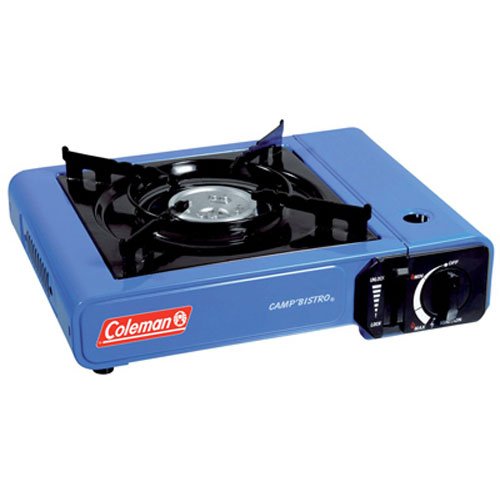
After that I went for the butane camping stove and left that in the kitchen. If you don’t have one of these yet, just go and buy one. Not the mini  backpacking one but the cheap, large one used of camping. Its far more stable and convenient for blackouts. The one I have is just like this one, the Coleman Butane Stove. Bottles of gas are 2 bucks although its not hard to find them for one dollar when on sale. Stock up. I used a canister every two or three days. This was cooking lunch and dinner, heating water throughout the day for coffee, tea and mate. Stock up and keep a couple weeks worth of gas. It’s cheap enough, extremely handy for these kind of situations and can be used safely in any kind of house or apartment.

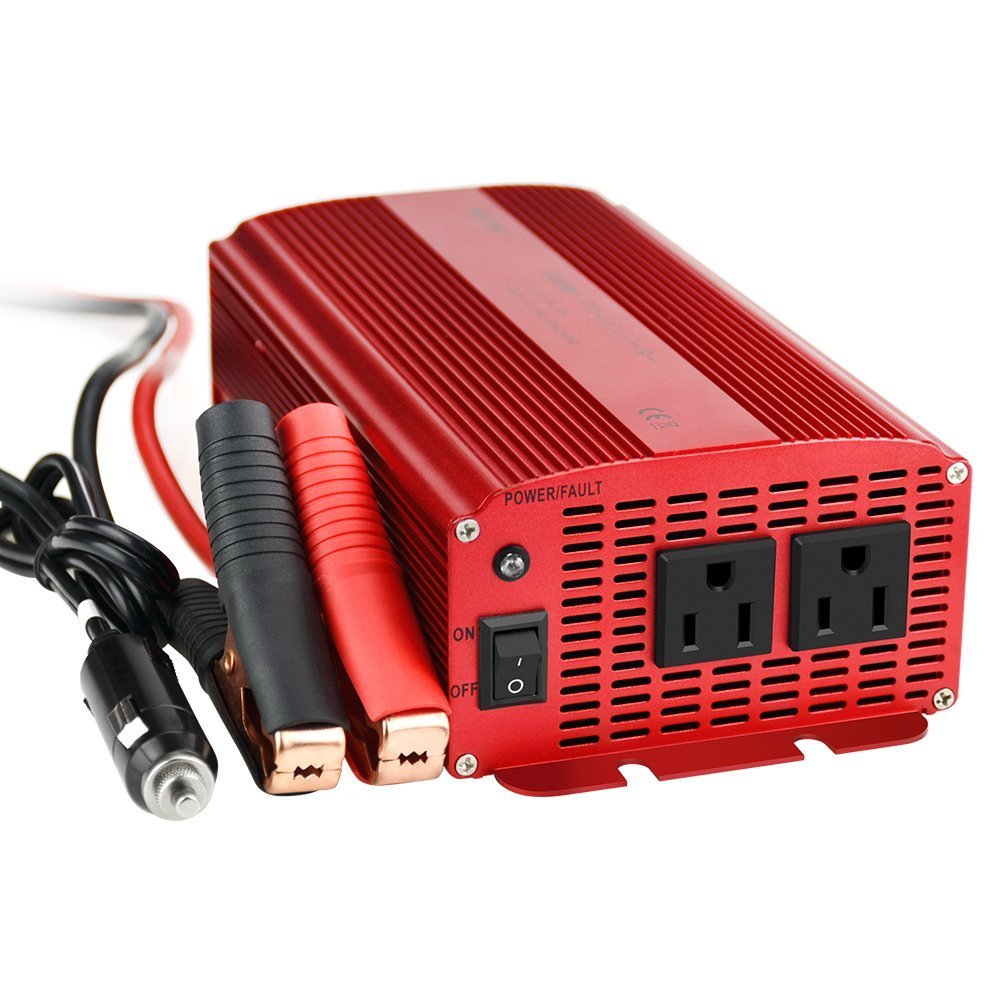
6)If you have a car you already have a generator that can run most appliances in your home, one or two at a time. All you need is an inverter. My 500W inverter allowed me to turn on the wifi, use my laptop and charge the cell phones. Careful not to abuse it, you don’t want to end up with burned cables or a dead car battery. These days even fuel efficient refrigerators can be run with a 500W inverter. I would run it for couple hours at a time, get some things done with the laptop before going for running errands and recharging the battery. If you’re going to use the inverter for something more than running a laptop for an hour or two you want to keep the car running so as to avoid draining the battery.
Tip: The advertised power of these car inverters is usually exaggerated a bit. For charging a small laptop and little else a 300W inverter is fine, connected to the 12V lighter. Anything more than that and you’ll probably start blowing fuses in the car. Better yet, get a 500W to 1000W inverter that connects directly to the car’s battery. The bigger the car and the battery the better. Still, Check the wattage and try sticking to half of the max. wattage of your inverter.


7)Ice bottles. Put a few bottles of water in your freezer and use it as an ice box for a couple days, maybe 3 or 4 days in winter. Cover everything with a plastic tarp in there for extra insulation. Don’t expect any miracles, but using this technique it will give you enough time to eat any perishables you may have in there before they go bad.

8)Rice, pasta, canned tuna, canned vegetables, lentils, the more shelf stable food you have the easier it is. We are used to eating these things already during “normal” times, so its already easy for us to stop using the fridge and stick to these shelf stable foods. Sure you miss a cold drink in summer, but you get by none the less.
Tip: For rice and especially lentils, pre soaking saves a lot of fuel when cooking. Don’t forget the lid too!

9)Gravity fed city water saved us. If you’re on a well and need to pump water, prepare accordingly. Basically you want to look at your situation and have plan B or even plan C for everything. Cooking? I use electricity. If that goes down I have the butane stove. If that doesn’t work I have the Cat32 alcohol stove which also works. I also have LPG gas bottles used for the water heater, which ca be used for cooking with the right burner. If you have a well, you maybe want a manual pump in case the electric one fails.  Having a plan B, and even plan C for the more critical systems saves the day when SHTF.

10)Living next to town made many things easier. Sometimes you picked fresh food and cooked it right away, buying things you needed, dropping by laundry. Even simple things like having a pizza delivered (even if I usually make my own) it just means you have more resources available and more at hand. Even my neighbour offered several times to hook me up to his grid if I needed it. I don’t like asking for favours or even accepting them when offered, but it was nice knowing that it had been offered.

11)Location, location, location. Living in an area with tropical climate means that when these things happen chances are you’ll get by more easily. In colder climates staying warm is a top priority, especially in winter and a blackout complicates this a lot. The backup systems are crucial in this case. In more benign climates though you just don’t worry about that sort of thing. In sunny places, even lighting gets easier, with daylight up to 9PM in some cases.

12) Batteries, chargers and cables. You need several of these, just like you do with flashlights. You need batteries for your flashlights of course, both primaries and rechargables. Li-ion ones are especially useful for those larger Lumen LED lights. They are brighter and run for longer periods of time. Battery banks and solar panels are also useful. The Waka Waka Power battery bank plus charger worked great yet again. Highly recommended. Keep a lighter plug for the car that has two USB outputs. This means you can charge two phones at a time when running. When there’s a blackout, this is very convenient. A good working solar panel is worth purchasing. I’m considering the one by Goal Zero Nomad 20W  given the positive reviews it has.
FerFAL
Fernando “FerFAL” Aguirre is the author of “The Modern Survival Manual: Surviving the Economic Collapse” and “Bugging Out and Relocating: When Staying is not an Option”

Monday, January 4, 2016

Post-SHTF Business: Renting Generators

En la puerta de un pequeño negocio. Recomiendan evaluar el costo-beneficio. (Emiliana Miguelez)
http://www.clarin.com/ciudades/Equipo-hogar-puede-costar-entre-_3-400-_20-000_0_1288071211.html
Argentina always had problems with power outages. Back when I was a little kid it was something that happened pretty often, especially in summer when power demand increased. Back then we had a drawer in the kitchen that was stacked with candles. Now, its not that I’m THAT old, it’s just that LED technology is still pretty new. It just wasn’t practical to use incandescent lightbulb flashlights for illumination. They went through batteries in a matter of minutes and it wasn’t really that bright anyway. Instead you would get a candle or two, get one of the old candle holders kept around the house, or if you couldn’t find one just lit a candle, drop a couple drops of wax on a small plate, place the candle on top and be careful not to drop it and burn down the house. So you did that, waited a few minutes, sometimes a couple hours until power was restored.

The thing is that as I’ve said many times, Argentina post 2001 is the same story, only worse. You still have power outages, but after 14 years of structural neglect from the government and power companies outages tend to last days, not just hours. This may be expected in more isolated locations, but in a large city like Buenos Aires where millions live it can be challenging.
It used to be that with power outages that lasted a few hours a generator was a “nice to have” item, but with those lasting days not having a generator means some people can’t leave their homes any more. You can’t ask someone with a disability or +80 years to walk back and forth to their 6th floor apartment. Water needs to be pumped up, so no power means no water for many as well. For many stores, no power means their merchandise goes bad and they can’t stay in business without working refrigerators.
Buying a new generator in Argentina right now isn’t cheap, expect to pay between two or five times more than the price for that same unit in USA. Then you have to worry about repairing the generator, maintenance, making sure it doesn’t get stolen, storing it, etc. Because of this, renting generators has become a popular choice, especially for business, stores and buildings who need larger units. The prices are all over the place, from 50 dollars a day (for a genny that costs 400 USD in America) to 600 USD a day for some of the bigger 200kva units such as the ones large stores and buildings need to operate pumps and elevators, fuel not included.

Just something to keep in mind. In certain climates and certain locations, having a generator is pretty much mandatory, one of those facts of life. But also keep in mind that it may be a significant asset in certain scenarios, everywhere from powering your neighbours in exchange of other goods and services or simply renting it out for cash. In this case getting bigger, reliable generator makes sense.
FerFAL
Fernando “FerFAL” Aguirre is the author of “The Modern Survival Manual: Surviving the Economic Collapse” and “Bugging Out and Relocating: When Staying is not an Option”.

Wednesday, November 12, 2014

Reply to: Winter Preparedness: Buying a Generator


Reply to: Winter Preparedness: Buying a Generator

Anonymous said...With the same ~$1000 budget for a generator, you can get 300Watts of solar panels, charge controller, and batteries that will let you run LED lighting and communication.

Add an inverter/charger and you are more prepared for low-quality power common in collapsing economies that are still limping along. A generator is for running large loads and charging battery bank during long periods without good sunshine. I'd combine my loads that are big (freezer/clothes washer/water pump/power tools) and run a gas gen-set to use them, while the battery is also getting some charge. Morning is a good time to run for a few hours, then do service on genset. 24/7 operation of 3600 rpm genset to be able to flip on a light or watch tv is noisy, fuel-guzzling and wears out the genset rapidly. Disagree that propane is a good alt-fuel for genset: the engine is generally low-compression to be able to use 85 octane "regular" or worse fuel, not high-octane equivalent that propane is. Dedicated propane engine, sure. Propane is almost as dangerous as gasoline, and should not be used or stored where people sleep. Diesel is much less dangerous to store or handle, and the US-Mil thinks so too.
Fusing and transfer switching makes power safer, as does planning ahead.

pdxr13
Renogy 100W Mono Starter Kit: 100W Solar Panel+20' Solar Cable+30A PWM Charge Controller+Z Bracket Mounts
A solar setup sure is a good idea, but the 100W solar panels plus Deepcylce batteries and inverter does add up quickly to the price. LED lights isnt as much of a concern , the problem is more demanding appliances such as the fridge, washing machine and AC. For that, the generator will give you power as long as there’s fuel. With batteries, once you ran out, you’re out of luck until youe recharge with solar or a generator. Of course combining a solar power system with a generator would be the best of both worlds.
FerFAL

Friday, August 1, 2014

Reply to: “Solar Storm: How to Get Ready” & Diabetes

Hello Fernando,
I ran across your blog a couple of years ago and have enjoyed it very much.
In reading your latest post “Solar Storm: How to Get Ready” it reminded me of the book “One Second After” which talks about life after an EMP event.What struck home to me was the main character had a daughter that was 12 and was a type I diabetic (insulin dependent). When I read it my 11 year old son had only been diagnosed with Type I Diabetes for a year. That and I have family an hour and a half from where the book’s story is located in North Carolina.
I thought I would share some of the things I have done that might be helpful for other Type I diabetics or parents. In addition please feel free to offer any other suggestions.
Feel free to use any of this information or images in any way that will help others.
Thank you for your blog and books.
-MIke
Building up Diabetic supplies…
Inline image 2
Building up Diabetic supplies…
Here is what we do. Basically it is like the “pantry” system for food. We order just a little extra with each order. Not much, just a little more than we need. In about a year and a half you’ll have a good amount on hand. Just make sure and keep it rotated out!! What those dates! (You’ll notice numbers on the strip cartons, they are months. Also that picture is really old. We don’t have any 2012 stuff! hahaha!!)
Build a good relationship with your doctor…
Things got a little worrisome at my job and it looked like their might be a layoff, so we told our doctor our concern and he increased our prescription for insulin so we could store a little extra just in case. not sure if all doctors are this way but when we got started I mentioned I liked having extra insulin on hand in case of an emergency. So we worked it out where we would get a little extra insulin with a 3 month order and that helped to get us ahead.
Build a network…
No man is an island… get networked with other diabetics in your community. Work together. You’ll be surprised how many people keep extra supplies on hand. Plus sometimes people will change meters and have a few boxes of test strips or switch gauge needles, etc…  they might give you some or sell to you cheaper than you could buy them.
We have ran out of Ketonestrips once (key word ONCE! Hahaha!!) and had a sick child and it was late at night. One phone call and we had a bottle in less than 15 minutes.
We have a list of Diabetic Parents we keep, and the group is quick to reach out to newly diabetic parents to help them cope.
Keeping your cool…
Insulin must be kept cool until opened. Test strips should not get too cold or overly hot. (About 43 to 100 degrees.) In case of power outages (which we have had in the winter) I have a few systems set up.
1. Generator
2. 1 Liter Frozen Ice bottles and small cooler just for insulin & strips)
3. 12 Volt Car cooler (in case we need to leave or use it to keep insulin cool and we are out of ice.)
Diabetic Emergency Supplies…We keep an emergency Diabetic Supplies kit in all our vehicles.
These are basically for the “Oops” times when my son runs out of something while we are out.
Yeah, it has happened. (They are all stored in a Gluclose tablet bottles, they are rotated our during the time change.)
Inline image 1
Contents from picture… (From top to right):
10 – Pen Cap Needles (For Insulin Pen)
6 – 30 Unit Syringes (We are using the rest of the up and moving to the 50 unit ones.)
16 – Lancets
4 – 50 Unit Syringes
20 – Alcohol Prep Pads
“There is nothing nobler or more admirable than when two people who see eye to eye keep house as man and wife, confounding their enemies and delighting their friends.” – Homer
 
                      -
 
Thanks for sharing your experience MIke!
I read “One Second After” and liked it a lot, recommended reading.
Regarding keeping the medicine cool, I think a portable compressor Freezer/Refrigerator like this one the Dometic (CDF-11) would be a good idea.
Its portable and can be run using any vehicle as a power source rather than needing a generator. Of course there’s not much space, but it should do ok for medicine.
Another thing to keep in mind as a last resort is the Zeer pot, or Pot-in-pot refrigerator, which can be easily made for little money using two clay pots, one smaller than the other. Sand is placed in between the pots and its kept wet. Food is placed inside the smaller pot and covered with a wet cloth. Evaporation does the rest, removing some of the heat.
Don’t expect a lot, but it is surprisingly cool and it sure would help to drop the temperature some.
Thanks for your email and good luck!
FerFAL

Sunday, December 29, 2013

Who has it worse when SHTF/Blackouts/Etc.?


Dave Dora, with Grand Haven Board of Light and Power, works on fallen wires in Lansing, Michigan. on December 23, 2013.
OK folks, let’s call a spade a spade, shall we? We all know what’s happening given the recent storms and power outages but the truth is, some people just have it worse than others and this gentleman explains it pretty clearly.
This is something I’ve made reference to many times in the past.( by the way, the town where generators were getting stolen? Population 8.000, there goes another myth)
First, it’s just common sense that a company focuses on restoring service where most people are being affected. If 12 hours of work restores power/water/gas/keeps safe 50.000 people, then any smart resource manager will to that before spending 6 hours to restore service for 5.000 people let alone a few dozen.

This is where a lot of the widely accepted survival myths fall apart. “I live in my BOL homestead already and I’m a much cooler survivalist than you! I spent two weeks without power, used my 100.000W generator and spent 5000 USD in gas.” On the other hand, someone that doesn’t live a gas tank away from the nearest town, in a place with better infrastructure, didn’t even go without power, or if he did it was restored within a few hours.

Then you have the other point the man in the video mentions, and he’s absolutely right too. Given somewhat equal population masses, nicer areas get taken care of first. Why? Because those are the ones with more financial and political power, maybe were the company’s own executives live themselves. Besides, no company wants to upset those that may end up deciding if they get a new contract or not, if they are authorized to expand or get safety approvals. While this is of course unofficial, it is common sense as well.

So keep all this in mind when making up your mind regarding where to live and which places are better off. In novels super hero survivalists may win the day, but in the real world living in isolation has several disadvantages, and its not just about power.  Take a good long look before moving somewhere with poor infrastructure or too isolated to care about.
The same principle applies to security and policing, water, public infrastructure and environmental hazards among others. 

FerFAL

Monday, December 23, 2013

Argentina: Living with Rolling Blackouts and days without Power


Monday, November 4, 2013

Thoughts on National Geographic's "American Blackout"


Friday, July 20, 2012

Preparing for Blackouts

http://www.cbc.ca/news/world/story/2012/07/05/storms-us-aftermath-friday.html
I’ve been through many blackouts. At times we went through one every two days all summer long, sometimes it was a week without power, even more in other places. Summer time was particularly bad because of the greater demand and lines would burn up and transformers explode, but that didn’t mean you didn’t have them every once in a while the rest of the year too. That’s just the way it is in most South American countries. Even if you have power, and this again happens during Spring and Summer, we experience “dirty power”, low voltage power that is often not enough to make appliances work and even ruins many of them. Instead of having 110V, you just get 100V or 90V. Some appliances tolerate this better than others. I remember that the microwave simply would work, and the AC and washing machine would make awful noises while working at half of its normal performance. The “dirty power” issue isn’t part of daily life in most of USA, but as decay spreads due to the financial crisis it could eventually become an issue. The day you have this feeling that the light bulbs just look dimmer than usual… yes, that’s it.

You can solve this by finding a voltage elevator. This may not be available now but if the problem becomes common soon enough electricians will start putting these together, its not that difficult for a pro electrician. The one I had in Argentina solved my “dirt power” problem, and was build by an electrician that saw the business opportunity. Thank you Capitalism! This guy, he was selling thousands of these to happy customers like myself. You might want to add to that a surge protection as well, or get a proper power stabilizer that either increases or decreases so as to always provide 110V or 220V, depending on where you live.

Regarding blackouts in general, many of these points I’ve covered before, in more detail, but a quick list of tips would be the following:

1)Have plenty of LED flashlights. Don’t bother with anything else since LEDs are by far more efficient than incandescent lights. I’ve used candles extensively, but the fire hazard is considerable and always there.

2)Get used to having a LED light with you at all times. With the gadgets available today, no one should be without a nice 1xAAA LED or at least a button cell keychain flashlight in their keychain.


Streamlight 73001 Nano Light Miniature Keychain LED Flashlight, Black


3)Be very careful regarding going to bed and leaving candles lit. A curtain blown by the wind, a candle that falls after melting, glass container shattering due to temperature or accidentally spill, any open flame indoors is a considerable risk.

4)A headlamp can be your best friend during blackouts. Its one thing to go without light for a couple hours, its another to go for a couple days. You cant just sit it out, you have to do stuff. With a headlamp, you get to use both hands while putting that light exactly where you need it. Thing doing repairs, washing the dishes, working, heck, even the military understands this and has helmet mounted lights.

5)Whenever possible, use flashlights and other devices (radio, etc) that run on a single battery. Sometimes 1xAA is all you have left, and it means that you can power two separate lights instead of just one.

6) Go for lights that use commonly available batteries for blackout flashlights. Even if you have CR123A tactical lights, also keep more common AA and AAA flashlights at hand. If blackouts become common, you’ll need to get yourself rechargeable batteries and these also tend to be cheaper (and safer) in the AA and AAA variety.

7)Don’t get a huge generator. They are heavier to move around, noisier, more expensive and use up more of your precious fuel resources.  A 35oo watt generator (more or less) will run your fridge, washing machine, water pump, PC, lights and charge your tech devices. It wont be doing all at once but you can run some at the same time. If you run your fridge three hours a day and keep good fridge door discipline (open it only when absolutely needed) thats usually enough in most temperature condition.

Yamaha EF2000iS 2,000 Watt 79cc OHV 4-Stroke Gas Powered Portable Inverter Generator (CARB Compliant)

DuroStar DS4000S 4,000 Watt 7.0 HP OHV 4-Cycle Gas Powered Portable Generator

8) Know what you need in terms of power. Some appliances have particularly demanding starting watt needs. A microwave or well pump for example may not work at all with a smaller generator. Check each specific appliance so as to see how many watts it needs to run, and double that so as to approach the starting watt demand.

9)A chest freezer is more efficient. Because of the shape and the way the door opens alone, it works better for when you only turn it on a couple hours a day. In very general terms, cold air works like a liquid. With a vertical fridge cold air will “spill” out of it each time you open that door. A chest freezer or fridge is better in that regard. Another tip: Throw a few soda bottles into the freezer. When lights go out you can move these in the bottom of the fridge along with your food (all together piled up) and cover it with a plastic tarp, even several plastic grocery bags will do, the more layers of insulation the better. This way you can keep food cold enough for a couple days in hot summer conditions. I’ve done it before myself several times so I know it can be done.

10)Don’t run your generator for stuff you don’t need. TV, videogames, even AC Is a luxury you may not be able to afford. If you have one of these poorly designed boxes of a house where natural ventilation doesn’t occur, then run the AC for about an hour before going to bed. As for kids, tell them go play ball with their neighborhood friends. You might want to keep them within sight in your back yard for security reason.
FerFAL

Tuesday, February 22, 2011

Power, water and utilities never being restored

Hi
I live in a upper middle class suburb of a large city in the southwest. If SHTF economically, will the city likely be able to keep the water, gas and power going, even with higher rates, and maybe with rolling blackouts? Even though I have a 2000W generator and a 20,000 gallon pool in my backyard for backups, I'd rather pay more to keep the standard utilities going.
Al
Hi Al,
Think about it for a second. If tin-pot dictators around the world manage to keep basic services working, so can USA. Cuba “somewhat” (everything is somewhat during extended SHTF) manages to have power, running water, even commie filtered Internet. That means that in the long run, no matter if there’s a disaster these services will be restored. Evo Morales manages to have these working in his country, that means a bipolar kangaroo can eventually figure it out too. Again, expect serious problems and poor service, but you’ll have them. That middle ground is where a lot of preppers get lost. I dont even have a generator, but I do have a voltage elevator, something I posted about before and few survivalists would have thought about. That right there is the perfect example of the “somewhat” problem. Thankfully that gadget saves me a lot of headaches and money in appliances that would otherwise be ruined by now. Does this machine make sense in current USA? No, you get 110V delivered or you dont get any at all during a blackout. The situation hsn’t reached the point where they have to start delivering 90V or 70V instead of 110V because the grid can’t handle it due to decades of poor maintenance. May happen one day? Who knows? but its not an immediate concern in USA.
Same thing with tap water. I pay for my water bill, it works (most of the time) but even tap water must be filtered here to get most of the heavy metals and chemicals out of it due to its 3rd worldly water treatment.
Security is again another example of this “in between” situation. The survivalist wet dream dictates that “after SHTF” you literally get away with murder. You shoot the bad guys and everything works out great for you, but around here and most countries that have inefficient police or (even worse) liberal agendas, the bad guy is the victim, you’re the capitalist pig shooting unprivileged minorities and if they catch you they will send you o jail.
A few weeks ago here in Argentina, a man brought out his gun to defend himself from a would be home invader. Bad guys surrenders and the cops arrive. what happens? Mr. bad guy is released right away but the honest citizen is accused of threatening the criminal with the gun and stays in jail. No kidding , that’s how things are these days.
Mark my words folks, their selling the liberal socialist dream as the solution to every problem currently being experienced in every country round the world. We’re all going to be seeing much more of this sort of injustice in the coming years. Preparedness will revolve heavily around protecting our rights, knowing how to use the new rules to protect ourselves for big brother , sorry , make that “big comrade”.
You are right about expecting the cost of utilities going up. Not Hollywood material, but one of the greatest challenges people will face in the coming years will be being able to pay the bills and buying food to get by.

FerFAL

Wednesday, January 5, 2011

Automatic Voltage Elevator


I finally got this product and had it installed by a licensed electrician. These are made locally and the guy that sold it to me already made and sold 400 of these this year with prices ranging from 300 to 400 US dollars each.  Talk about a good, post SHTF business niche when power problems become common! ;- )
I had helped out this guy before and when I called for the favor, he was installing it the following day at exactly 8AM. The electric installation is of course simple, just install it after the breaker, but he also got the L shapes and installed it properly in the wall in a few minutes, checked the W to make sure everything was ok.
So now whenever voltage drops from 220V to 170V all of a sudden, all I hear is a click and the W elevator does its thing automatically. This happens during hot days when people use  a lot of power and the grid just cant stand it. With the voltage elevator installed, everything works ok including AC and the power hungry microwave. Ah! The joy of AC! Its bad enough that I pay more for power in Argentina than a house twice its size pays in Texas, but you also pay for something that is of such poor quality its of no use to you. Something similar happens with water, tap water that you pay for but you shouldn’t drink it unfiltered. (well, not if you want to stay healthy anyway... :-)   )

This is the device. 9Kva (40 Amps)  and gives me 220V with incoming power as low as 155V
I spent a couple hours this morning without power, but at least now when I have power I have it for real and can use all my appliances. Besides, voltage this low will ruin electronics pretty fast. Its also a fire hazard because the electric wiring heats up. I noticed this on the AC cable as I unplugged it before installing the voltage elevator, it felt very hot to touch, but not any more.
Notice that and automatic voltage elevator and an automatic voltage regulator are not the same thing. A voltage regulator may or may not work well with permanent low voltage. Same thing with UPS, some do this but not all of them are designed to work with permanent low voltage, so make sure you’re getting one that is capable of doing so if that’s a long term problem for you. Of course, a big UPS also gives you power if power goes down completely. For recurrent, short period blackouts combined with dirty power issues, it’s the perfect solution, in some cases better than a generator.
Still considering getting a generator though in case power goes down for longer periods of time. Something like this can power an average size house. 
Honeywell HW7500E 9375 Watt 15 HP 420cc OHV Portable Gas Powered Home Generator With Electric Start 

FerFAL

Thursday, December 30, 2010

Reply: 220V? Not anymore, just 170V

OK guys, seems I’m buying one similar to this one.
 Also 9kva. but it levels as low as 150V back to 220V with a 7% error margin. This will make summer much more tolerable and not risk ruining my electric stuff due to low voltage.
Don, thanks for the refrigerator tips. One thing I learned is important for “cheapo” blackout solutions, at least when it short term blackouts, is elevating the amount of cold mass in the refrigerator before lights go out. Every empty space I have in the fridge or freezer I fill with water bottles. Once these are cold or frozen it keeps the space cooler when power goes down.
If the power goes out for longer terms, I move some of the frozen water bottles and gel packs (yes, I have some of those too) into the lower drawers of the refrigerator, put the food I want to keep cool there and cover it with towels and plastic. This is basically a version of the old “ice box”, back when there was no power and the ice man left you a chunk of ice to keep food cool. The better insulation the longer it lasts. This works ok for 24 hs or give or take. At the same time, I’m also storing water and once the bottle of water is no longer frozen you can drink nice cold water during the blackout.
This is a very cheap solution for short term blackouts. For longer ones you of course need a generator, but these are still things that can be done right away for no money.

FerFAL