.

Showing posts with label investments. Show all posts

Thursday, December 14, 2017

How to keep your Bitcoin safe


So you followed my advice, put some money in Bitcoin and by now you doubled or tripled your investment. Good for you my friend!
Keep in mind what we’re doing here though. Keeping eggs in different baskets right? Crypto currency is a VERY attractive basket thought and if it ever reaches just a percentage of its true potential…
Anyway, if you bought some coin I’m sure you’re a happy camper and that’s fine but just like you keep your gold and cash in a safe, just don’t leave your money sitting there in an online account. It’s not safe, and if something happens to the company, lets say Coinbase goes under or gets hacked, you may lose your Bitcoin. I know that with reputable companies this is unlikely, but it has happened before and all experts agree on not being a good idea to leave large savings just sitting there.

What do to then?

You have a few options. The idea is to have a cold wallet for the bulk of your coin. Cold storage means storage that is offline and therefore impossible to hack. You can create a paper wallet, with extreme precautions to reduce the chances of hacking such as going off line and using a live OS in a fresh USB drive, print with an offline, wired printer.

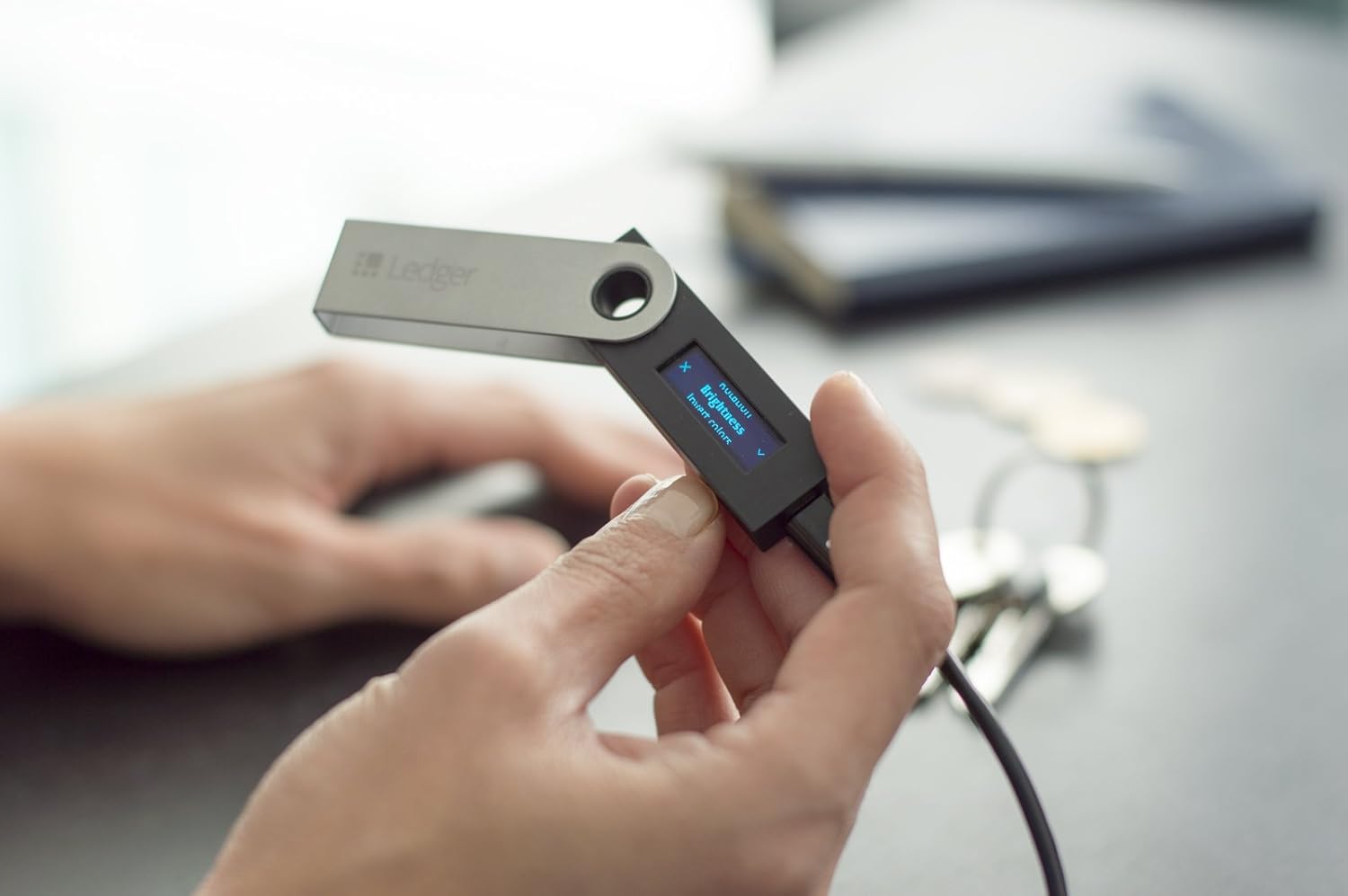
What most experts agree on being the best way to store Bitcoin and other cryptocurrencies is using a Hardware wallet. These are devices similar to a USB drive, with its own screen an pin number which even in a computer infected with malware (like may are these days)  it would be save to use.

I recommend these two, which are considered the best, the Ledger Nano S and Trezor.
Using it is easy enough following a few simple steps. Make sure you keep the recovery code VERY well protected (you write this down in paper), a couple copies in different safes. This would allow you to recover your money if the device is stolen, lost or destroyed.

FerFAL
Fernando “FerFAL” Aguirre is the author of “The Modern Survival Manual: Surviving the Economic Collapse” and “Bugging Out and Relocating: When Staying is not an Option”

Tuesday, November 14, 2017

More questions about Bitcoin


Message:
Hello, Fernando. I was wondering more & more about Bitcoin, but I can't find too much clear information about it- everything starts in the middle & doesn't seem too concerned about telling you how not to get snagged-up with it (ex: looking like a drug dealer or a money launderer). Would you people tell me some more about it? I would hate to miss a good investment, but I don't even get how it IS an investment- it doesn't seem like there's any company that distributes it, so how can there be any stock? And why not just make your own?
A-

Hello A,
Again, I’m no Bitcoin expert by any stretch of the imagination but I’ll try to answer some of your questions.

Bitcoin is a currency, a virtual one at that but some Bitcoin does not make you a drug dealer any more than having a roll of 20s in your pocket makes you one. Don’t let the mainstream media agenda intended to stigmatize Bitcoin get to you. In any case, ALL large financial groups are into Bitcoin at this point, so don’t feel bad about doing it yourself.
Second, it is not an investment. Investments generate profit. Buying Bitcoin will only get you… Bitcoin. Like gold, it can go up or down and you selling at the right time may leave you with a profit but it’s a currency, not an investment.

Finally, you CAN make your own. You can mine Bitcoin with your computer. The problem is that by its own nature Bitcoin is HARD to mine, meaning you need a lot of computer power to mine it so that its profitable and compensates the electric power you are using to generate it. People used to buy mining computers to mine Bitcoin and many still do. How profitable it is today is hard to say. All I know is that you need some initial investment for the mining computers and electric power better be rather affordable where you are.

As I said before, I think Bitcoin is extremely interesting but it’s not on the same line as gold and silver, which have been around for thousands of years. Can it be the gold of the future generation? Maybe, but don’t put into it anything you can’t afford to lose. That would be my advice.
As for buying Bitcoins, I suggest you do a lot of google and reading first. Chances are you’ll end up in Coinbase or maybe Localbitcoins. No, I don’t have any association of any kind with either one, they are just some of the most common names that pop up.
Good luck!
FerFAL
Fernando “FerFAL” Aguirre is the author of “The Modern Survival Manual: Surviving the Economic Collapse” and “Bugging Out and Relocating: When Staying is not an Option”

Friday, November 3, 2017

Survival Finances: So, did you buy Bitcoin when I told you to do so?


No? That’s ok. There’s still time.

I try to be very careful with my advice. You don’t see me telling people to run for the hills (or relocate to areas where a real estate broker friend of mine will sell you property and giving me a cut) When I firmly recommend a product, it’s because I truly believe it’s worth it.
Now from a practical survival perspective, Bitcoin is a powerful tool. Not in theory, not in the future. Today, bitcoin is used in places like Venezuela, where the entire society has basically collapsed into a nightmare of inflation, crime and corruption, ran by a dictator. If in that environment people find Bitcoin useful, then its empirical information, not theory.

I like empirical. Its not supposing, guesses or assumptions, it’s observation of facts.
A few weeks ago I did that thing I rarely do and gave actual financial advice by saying “some precious metals, investing in reliable stocks, investing in good real estate. And yes, putting some money in Bitcoin.” If you did put a few bucks in that Bitcoin basket back then, Bitcoin was around $3.400… Today its worth  $7.300.

As I said back then. Bitcoin is just one more tool to work with, but it may well be a game changing tool if it fulfils its prophecy as the global currency of the internet era. If it becomes that, if it becomes the gold of the digital era then the sky is the limit.

Or not. Don’t spend (like Gold, Bitcoin isnt an investment) more than you can afford to lose.
I like to see Bitcoin going up but to be honest I’m betting on it for the long run. Some people sold thinking that it peaked at $1000, then at $2000, Then $3000 and so on.  Like precious metals, but it and store it for that rainy day.

My advice remains. When funds allow it, buy a bit of precious metal here and there, same for some actual cash for a rainy day because cash is still king, and also put some in Bitcoin every now and then.
Enjoy the weekend folks.
FerFAL

Fernando “FerFAL” Aguirre is the author of “The Modern Survival Manual: Surviving the Economic Collapse” and “Bugging Out and Relocating: When Staying is not an Option”

Tuesday, August 8, 2017

Is Bitcoin the new gold?


I’ve always avoided giving financial advice. Not my job and just too much responsibility.
When it comes to such a thing, I just stick to what I know well which is economic collapse. It’s what I went through and it’s what I’ve researched over the years.

When it comes to an economic collapse there are a few basic points to keep in mind.
When everything is going to hell, you can count on banks screwing you to save themselves. Closed doors and a “Me speako no English” sign on it… in New York City. Frozen accounts, conversion to new currencies worth a fraction of what the original one was worth.

Precious metals provide a hedge against hyperinflation or full economic collapse. They are an established commodity over thousands of years, accepted as something that holds intrinsic value. IT doesn’t matter if it’s just a chunk of metal. In our minds, and now for thousands of years, “its worth its weight in gold”. And oil is worth its weight in oil, so are cereals, beans and so on.
And then there’s bitcoin. A complex cryptocurrency which most people don’t even fully understand what it is. The only way to understand more is to spend several hours, maybe several days reading up. What’s important to understand is that Bitcoin is a commodity. The best way to describe it would be the digital gold of the internet era.

No, its not gold, nor is it silver. The piece silver in my pocket, a 1964 Kennedy half dollar, is material, tangible, but that doesn’t mean Bitcoin isn’t valuable as well. What it lacks in tangible peace of mind it has in liquidity. Its easy to move around, access and sell all over the world. Its not controlled by anyone, no government. For Bitcoin you'll need a Bitcoin wallet. Which one?  I'm not affiliated in any way to any of them and cant recommend a specific one. Just look online and go for the one with the best reputation.

When asked for financial advice I’ve always kept a pretty conservative position. Diversify, some cash is important, very important actually. Some money in the bank, some money in a bank in a different country, some precious metals, investing in reliable stocks, investing in good real estate. And yes, putting some money in Bitcoin.

Bitcoin has been going up non stop this year. Will it stop and drop? Probably. Will it go up even more in the long run, maybe a LOT more? I think that’s very likely. While its digital nature means there’s always the risk of hacking or other tech related problems, its ability to be moved around, the market for it, easily converted to different currencies and increased acceptance are advantages worth noticing.
FerFAL
Fernando “FerFAL” Aguirre is the author of “The Modern Survival Manual: Surviving the Economic Collapse” and “Bugging Out and Relocating: When Staying is not an Option”

Monday, January 30, 2017

Stocks During the Economic Collapse of Argentina?


Dear Ferfal,
I think I’ve read every blog post you’ve ever written. Long time fan. Thank you so much for sharing your experience and wisdom with everyone.
The Dow Jones just hit 20,000! I have a question about what the stock market is like when TSHTF. Like most Americans, I “own” stocks through my retirement plan. If inflation goes really high, is a stock like a gold ring that doesn’t have value until you sell it (and therefore increases with inflation), or will stocks kind of stay the same price, and therefore lose tremendous value? What happened in Argentina?
And I want to say that you have actually changed my life. I live in a very safe place, the kind of place where people still can leave their front door unlocked. Which I sometimes do when I go next door (on the other side of the porch), but I’ve made it a habit to always lock the door behind me when I come inside. If I come home and someone is inside, I can run away. But nobody’s coming in when I’m home unless I let them in (not too many ways out except the front door). Anyway, I think it’s a good habit, and I think I’m better prepared for what’s coming thanks to you.
Best Wishes,
-Adam
...
Hello Adam,
Thanks for being a long time reader. I’m glad to know I helped make your life a bit safer! These are all little things we do, habits and strategies that start building up as our mindset changes.
I see survivalism, at least the practical version of it that I call modern survivalism, as a lifestyle in which practical decisions are made keeping in mind the best possible outcome in a worst case scenario. Sounds paranoid but it’s not. If doing one thing instead of another improves my odds and quality of life (better, safer, more peace of mind) then it is the one that provides the most strategic advantages from a tactical point of view. From the items in your EDC, the clothes you wear, the car you drive and the place where you live.
Regarding the stock market in Argentina during the crisis, here yet again we see that common assumptions and what actually ends up happening during an economic collapse have little in common.
Of course, the stock market has collapsed in the past and such a possibility is something to keep in mind, but we must remember than these situations are pretty complex, both in causes and effect. It is crucial to fully understand the former to correctly predict the latter.
Here is where we must ask ourselves, what caused the collapse in the first place? In the case of Argentina it was a bank run followed by a devaluation. The knowledge of an impending devaluation and rumours of accounts being frozen obviously triggered such bank run. If the same had happened for example with stocks, rumours of a bubble, followed by sharp sales and loss of value the story would have been different. The chart below reflects the Merval, the most important index of the Buenos Aires Stock Exchange.

We clearly see a big drop as expected at the time of the economic collapse in December 2001, but then as time goes by it starts going up, even as the Peso goes down, why? Well, the price is now in Pesos no longer pegged to the dollar, but even more important is that stocks represented something physical to own, a part of a company (even a struggling one!). Even if people suffered it often occurred that companies did well eventually. The common saying in Argentina years after the crisis about “its great that the economy is doing much better. Too bad we don’t get to see any of it” reflects just that. With a 25% inflation per year anything that held its value was better than the Peso. Real estate, US Dollars and yes also stocks.
I would say that looking at it from a historical perspective, good time-proven stocks tend to do well on the long run. High risk ones are more of a question mark. It sure isn’t a chunk of gold or silver in your hand, but the chances of it being worth only the paper they are printed on and the company going belly up isnt as high if you invest wisely. As always, don’t keep all your eggs in one basket and so on.
FerFAL
Fernando “FerFAL” Aguirre is the author of “The Modern Survival Manual: Surviving the Economic Collapse” and “Bugging Out and Relocating: When Staying is not an Option”.

Thursday, April 7, 2016

Survival... Rolex?


Hi Fernando,
Whats your experience with rolex watch?  Will it hold value in SHTF?  Decrease, increase?
 
If I remember correctly, you mention in your first book, but I am traveling and do not have it with me to look up what you said about it.
 
I have some savings which I am using to purchase precious metal coins. However, in one of the shops, I came across a (genuine) 18k gold ladies oyster perpetual president made in the early 80's for US $3,800 and it got me to thinking.
 
1) It is my understanding is that I could walk into any major city in the world and be able to convert it easily into cash.
 
In your experience, would that be accurate?
 
I am always on the go---traveling somewhere---both around the US and international.  I like the concept of a rolex because its subtle.  It is seen as a personal item and would never get counted towards the $10K cash limit.
 
Since it is an older model, if anyone ever asks about it, I will say it belonged to my grandmother and was passed down to me.
 
We have problems now in the US with police officers confiscating (stealing) your cash and monetary instruments claiming its suspicious for "drugs" even if you have committed no crime and have never touched a single drug in your life.
 
As opposed to bullion, it is highly unlikely that a rolex worn on your wrist would ever be confiscated by police or customs.
 
Other questions/concerns:
 
2) The scrap value of the gold in the watch is only about US $1200 compared to its asking price of $3,800.  In terms of holding its value, is it better to stick to bullion coins? Or would it be reasonable to expect that a genuine gold Rolex would hold/increase its value in bad times?  
 
3)  I am a single female and usually solo.  How much danger am I putting myself in by having and wearing a gold rolex? 
 
I am automatically on "yellow" alert whenever in public, and practice situational awareness at a level much higher than most.
 
For the time being, I'm sticking to "1st world" countries, although who knows? That could change.
 
I have done a lot of internet research about this model of watch and the price. Retail price for the same or similar watch in the US right now is between $7,000-$12,000.  This caused me to be suspicious of the seller, so I went back and examined the watch closely with gem magnifier, and it is definitely authentic.
 
I asked the shop owner why this piece is priced so low.  He said that most of the merchandise are things he purchased and re-sells.  But that this particular piece he is doing on consignment for a friend and she needs the $$.
 
He confirmed everything I had researched online about how, in the USA, this watch would sell for $7,000 +;
 
He said that here in Canada (quebec), there just aren't many buyers for rolex because Canadians don't have money like Americans do.  And that most of his rolex customers are actually Americans who come over the border to make purchases.
 
 
Thank you so much for everything you do!  Love your stuff, and Im just bummed that I didnt bring your book with me!
 
 
Angela
...
Hello Angela,
In most countries that I’ve been to form USA to Argentina and here in Europe, the advertising seems to be the same: “We buy your gold, silver, diamonds and Rolex”.
You have to keep it mind though that the selling price is nothing like the buying price. In general you are lucky to get half of what a potential customer is willing to pay once the dealer flips the watch. Now if you can get it yourself for such a low price then you could probably sell it elsewhere without losing money or maybe even making some on top.
In general yes, Rolex do hold their value pretty well, same as quality jewellery. The trick is knowing your trade, knowing how to avoid counterfeit items, and of course avoiding the ridiculously low offers you come across sometimes and sticking to serious people.
I was talking with a jeweller today and he was showing me how to grade diamonds, which imperfections are acceptable and which are not. Its all very interesting stuff. Again, the selling price is often not as good as the buying one so you do lose some, but Rolex watches hold on nicely. The nice thing about bullion is that market price is fixed so there’s less room for excuses. Try talking with the shop owner. Ask him, honestly, how much would be pay for a similar item if he was buying so as to get a reasonable profit margin himself. That will give you somewhat of an idea of how much you can get for it.
So, answering your questions.
1)Yes, in most city centers around the world you will be able to sell your Rolex for good money. Some dealers may haggle worse than others but you will walk out with a wad of cash. The trick is buying a quality item, paying as little for it as possible and then asking around to get a good deal when it’s time to sell.
2)For protecting money, I think precious metals is the way to go because as I said before, it has a given market price and there isn’t much to debate about. Pure gold is just that. Watches, antiques and even numismatic coins have a certain value as well and they may well be good investments and ways of moving around a lot of cash. I doubt the average TSA agent knows what a Mercury Dime 1916 D is, but the thing is worth $135,000 in  MS67 condition. Having said that, its not as reliable in terms of knowing the specific price as checking the daily given value of gold and silver. The same coin can be worth $100, or $100.000 depending on its grade, and the difference between Fine condition or Very Fine condition can be hard to tell. Even experts may have a difference of opinion. This kind of problem doesn’t exist with precious metals.
3)I would say the risk is pretty high. In a place like Argentina its downright suicidal. I’m not exactly a “soft target”, yet for some time I stopped wearing my gold wedding ring, replaced it for a silver one like lots of other people did back in the day. Now in first world countries this may not be that much of a problem. In most European capitals and large cities you see women with very expensive jewellery. Still, I would say a gold Rolex is pretty noticeable and pretty tempting. In moderate to high crime areas I would keep it out of sight. If you just want to keep it with you then it would just be a matter of being careful and when you know you are in more troubled areas just put it in your purse.
Stay safe!
FerFAL
Fernando “FerFAL” Aguirre is the author of “The Modern Survival Manual: Surviving the Economic Collapse” and “Bugging Out and Relocating: When Staying is not an Option”.

Monday, December 29, 2014

Apartment Rent Prices after the Crash‏

Hi Fernando!
Have been following you for several years now and now I have one question.
How did financial crisis influence rental prices for small apartments?
I am thinking of buying loft to create small apartments (30 to 60m2) to rent them out. Therefore I am interested to know, how how rental prices were doing during the initial crash, during “recovery” and how they are doing now.
Maybe you have some links to rental price graphs or something similar.
Thanks in advance for your answer!
Thanks a lot for the job you are doing! It really helps people around the world. And unfortunately – the further we go, the more it helps!
Kind regards from small country – Latvia ;),
JA

A small apartment is actually a good investment

Hello JA!
In the case of Argentina, the prices pretty much followed inflation, and by this I mean they followed the real inflation, not the much lower official one. This is important when you consider that we’re talking 30% to 40% inflation each year in Argentina. In most modern day economic collapses and crisis we see something similar going on. It’s interesting to notice that while property prices may drop, in some areas more than others of course, you rarely see rent prices drop much. Especially for the kind of property you are thinking of, an apartment or condo, probably in a larger city center.
Sometimes people are surprised by this but when you think about it, it does make sense since its closely related to the rule of 3: You cant live 3 minutes without air, 3 hours of exposure to extreme conditions without shelter, 3 days without water or 3 weeks without food. Rent is basically modern-day shelter and unlike selling prices it’s something that the lower income class will depend more on. Of course there are squatters and such but in general you get the picture. When it comes to food, water and shelter (housing) those are pretty basic necessities so it’s usually considered a pretty solid investment. With bigger houses, and further away from town, there’s usually more offers and more room to bargain, but if you need to be in town for work or study then you’re already talking about a more limited segment. Of course, it has the advantage of eliminating the need of commuting, which in hard economic times is a valuable asset. A small apartment for rent in town in a good area makes for a good investment in my opinion.
FerFAL

Fernando “FerFAL” Aguirre is the author of “The Modern Survival Manual: Surviving the Economic Collapse” and “Bugging Out and Relocating: When Staying is not an Option”.

Monday, October 20, 2014

Argentine Stock Market and Ammo after the Economic Collapse

MERVAL Index is the most important index of the Buenos Aires Stock Exchange.

Hi Ferfal,
I have been following you blog and videos for a couple of years now. Also, I am reading your new book and enjoying it immensely. I would like to add that I loved your first book too.

I have a couple of nagging questions and I am hoping you might be able to answer them. First, I notice that you never mention the financial markets in Argentina. When Argentina had its' financial collapse over a decade ago, were there ANY areas that thrived? Or was it too risky to be in the markets? I hear people recommend this stock, bond etc. as being a good form of protection against financial collapse, however, I tend to be very skeptical. I have purchased some gold/ silver, but is there anything else you recommend (especially in the financial markets). Please understand, I am not looking for a "hot stock pick", or a way to get rich, just added ways to protect myself.

Also, I have a question about ammunition. If a large economic event were to occur in the US, what is likely to happen to self defense ammunition (JHP's). Were they scarce in Argentina? Were they too expensive to buy? Did the government limit their use? The reason I ask is that I tend to favor the 9mm and the .45ACP and if hollow points are hard to find, I will eventually run out of my 9mm hollow points. Are the 9mm fmj's as bad as many people say? I figure that if it happens that they are hard to find, I can use .45 fmj's. What do you recommend?
Thank you for all of your no nonsense advice. It is truly appreciated.
-Matt

.
.
Hi Matt,
Regarding your first question, the Argentine market did get hit because of the economic collapse of December 2001, but it wasn’t as serious as you would expect. In fact, if you look at the chart, it seems to have been doing rather well ever since. Here, he have to keep a couple things in mind.

First, the argentine stock market wasn’t that big to begin with. There was no bubble to burst, so the drop due to the crisis wasn’t as significant as you might expect. Second, you have to keep in mind that as you consider the rising graphic, you must take into account that after 2001 the Argentine peso is no longer pegged to the US dollar and in fact inflation is likely bringing that chart down much more than it would initially seem, especially these last few years. I’m not stock exchange savvy but for the most part its understood that the stock exchange in Argentina is small, messy and you’re more likely to end up losing money. My advice would be to go for land, brick and mortar. Real estate has always been considered a safe, stable investment when buying smart and not falling for some developer’s scam.

Regarding ammunition, you already know that when things get tough, ammo gets pretty scarce. This is especially true for the more common calibers such as 22LR, 9mm ad 45 ACP. In the case of Argentina ammo was hard to find at times and it sure was expensive. The problem was that premium JHP ammo for defense was expensive to import after the devaluation, so there wasn’t that much floating around. Still, with some patience and a bit of money you did find it, especially in the more common calibers.

My advice here is to have plenty of ammunition. Start buying as funds allow but try going for 1000 rounds of pistol ammo. 5000 rounds would be even better, but 1000 should do as your first goal to go for. I know ammo is expensive but there’s just no way around it: Without ammo a gun is just a fancy paperweight or a poor club. If you buy a box here and there it will eventually pile up. Make sure to keep your emergency supply and not use it. I would go for quality JHP, in the case of 9mm I like 124gr +P. FMJ is not as bad as it sounds though. Granted, stopping power is pretty bad compared to JHP, but ball ammo kills people every day. Indeed, hardball FMJ .45 is superior to FMJ 9mm, but 9mm hollow point premium ammo will perform better than FMJ 45. Just make sure to buy ammo now for a rainy day. Even with ten boxes of ammo, not many people go through 500 rounds of ammo in defensive shootings during their entire life. Heck, most people will go their entire lives without firing a single round in self-defense, few will go through 50 rounds, let alone 500 or 1000.

FerFAL

Thursday, May 31, 2012

Jobs and Businesses after an Economic Crisis

Just what the title says. A few ideas and thoughts here and there that you might want to consider. FerFAL

Monday, June 13, 2011

A Constant Feeling of Crisis (Must Read Article)

Hello FerFAL,
I very much enjoyed reading your book. Not only was the information extremely useful, but I also appreciate your common sense writing style which makes the message much more actionable.
Having begun to follow your blog I thought you might be interested in a recent article I read in the June issue of Inc. Magazine regarding doing business in Argentina. The focus was on the unique business challenges faced with the expectation of economic crisis. Many parallels were discussed similar to those you brought up in your book regarding preparation and mindset. It might be worth your looking at and commenting on if you are after new content for your blog.
http://www.inc.com/magazine/201106/doing-business-in-argentina.html
Thank you again for your efforts.
Best regards,
Wade

A Constant Feeling of Crisis

Buenos Aires, Argentina
Think the U.S. economy feels shaky? Try doing business in Argentina, where corruption is the norm, regulations are absurd, inflation is rampant, and financial crises are a dime a dozen (11 cents next month).
By Max Chafkin | @chafkin | From the June 2011 issue of Inc. magazine

On the day his country exploded, Santiago Bilinkis stayed at home and watched the riots on television with his wife and infant son. It was painful. In Buenos Aires, one of the world’s great cities, looters were attacking grocery stores. Bilinkis’s bank account—along with every other account in the country—had been frozen by executive decree three weeks earlier. Argentina was out of money.
This was December 20, 2001, a Thursday. That afternoon, several people were killed by police in front of the executive office building, known as the Pink House, and President Fernando de la Rúa resigned and fled the capital in a helicopter. In the days that followed, Argentina would cycle through four more presidents and default on debts totaling $155 billion. Unemployment would soar to 25 percent, and local governments, unable to pay their workers, would simply invent and print their own currencies. It was the beginning of the worst financial crisis in Argentina’s history—and by some estimations the worst peacetime financial crisis in the history of the world.
Not that Bilinkis was surprised. His country had been spending far more than it collected in taxes for as long as he had lived, and paying for the shortfall by printing money or borrowing from international investors. Although he was only 31, Bilinkis had already lived through two coups, one bloody political purge, and 15 years of hyperinflation. Whereas the rest of the world treated financial crises as one-off catastrophes, Argentines looked at them like seasonal floods and prepared accordingly. You stocked up on U.S. dollars and canned food, and you waited for the crisis to pass. The general rule of thumb was one financial crisis every 10 years. It had been 11 years since the last one.
Bilinkis’s preparations were slightly more elaborate, because he had more to lose than most Argentines. The son of a psychoanalyst and a sociologist, Bilinkis grew up in Buenos Aires, went to a prestigious private college on a scholarship, and graduated at the top of his class. In 1997, after two boring, well-paid years at Procter & Gamble in Argentina, Bilinkis and a college friend co-founded Officenet, an office-supply company that served businesses in Argentina and Brazil.
At the time, this was a highly unusual decision. Since the 1950s, a series of dictators had devastated the Argentine private sector, concentrating wealth into the hands of politically connected oligarchs, corrupt government contractors, and, most recently, foreign investors. In Argentine Spanish, the word for businessman—empresario—had become synonymous with criminal, and it was widely assumed that the most successful people had robbed and cheated to get where they were. The word for what Bilinkis was—emprendedor—was not in regular use. “I’d gone to one of the top business schools, and I’d never heard the word entrepreneur,” Bilinkis says. “I just knew I wanted to start my own thing.”
Bilinkis also knew that he wanted to start a different kind of company. Officenet paid all of its taxes and eschewed corruption of any kind. At a time when software piracy was rampant in the developing world, he paid thousands of dollars for Microsoft Windows licenses. This put Officenet at a disadvantage relative to its competitors, but Bilinkis rose to the challenge. “We survived by being more productive than our competitors,” he says. “If you’re focused on evading taxes or paying bribes, you’re not focused on warehouse productivity or customer service or business intelligence.” By 1999, Officenet was profitable. The company had 200 employees and revenue of $20 million a year. Bilinkis had always dreamed about being acquired by a big American office-supply company; now he sometimes dreamed that he would be the one doing the buying.
But the crisis changed everything. Bilinkis knew a lack of cash in the economy would devastate Officenet’s sales. (Over the following months, they would fall nearly 80 percent.) His personal stake in the company—a block of stock that had been worth millions of dollars on paper—was now effectively worthless because of liquidation preferences on preferred shares given to outside investors. Many Argentines in this position, including his co-founder, simply decided to leave the country, but Bilinkis wanted to stay. “I thought there was a fight to be had,” he says. Officenet’s cash—some $20 million left over from a private equity investment in 2000—was safe in a U.S. bank account. If he could just get expenses in line, the company would survive.
On Friday morning, he took a taxi to the office and retrieved a folder that contained a worst-case-scenario plan. The plan—code-named Pi for plan inflación—had been kept secret from all but two senior managers. The first and most brutal step was an immediate layoff of a third of the company’s workers. “It was ugly,” Bilinkis says. “So ugly. I knew that most of the people we let go that day would not get another job for a long time. We were pushing them to the crocodiles.”
But it had to be done. That afternoon, four days before Christmas, he mailed (as stipulated by Argentine law) termination notices to 80 people. The move was prescient: The following week, the Argentine government suddenly changed the rules for severance payments—instead of one month’s salary per year of service, it would be two months’ salary. If Bilinkis had waited just one week, his company would have gone under. “There are stupid changes in context that can happen at any time that will completely screw your business,” Bilinkis says. “You have to be ready to face whatever life throws at you.”
The meltdown of 2008—which nearly destroyed the world’s banking system, sent the United States into its worst recession in 80 years, and put half of Western Europe on the brink of economic collapse—barely registered in Argentina. Andy Freire, Bilinkis’s co-founder at Officenet, told me that he finds it hard not to laugh when his American friends complain about their problems. “Retail sales fall 5 percent in the U.S., and people say it’s a major crisis,” Freire says. “Our sales went down 65 percent in a single month. That’s a crisis.”
I’d come to Argentina to find out what we Americans might have to learn from entrepreneurs like Freire. Argentina is one of the toughest business climates on earth, and, in some circles at least, a cautionary tale for U.S. policymaking. A 2010 Washington Times op-ed, written by Richard Rahn of the Cato Institute and illustrated with a Photoshop job of the American President in an Argentine gaucho outfit, offered a litany of parallels between the two countries: “Argentina has extensive import bans and controls. The Obama administration has been advocating protectionist trade policies…[Argentina has] a value-added tax (VAT) and a wealth tax. Officials of the Obama administration and some members of the U.S. Congress are flirting with a VAT,” and so on.
Of course, comparisons like this are disingenuous. According to rankings maintained by the World Bank and the Heritage Foundation, the U.S. is one of the most business-friendly countries in the world. We have stable, transparent regulations, and we pay a smaller percentage of our income in taxes than almost every other rich country.
Moreover, it’s hard to chalk up Argentina’s problems to any one ideology. Argentina is an equal-opportunity boondoggle, a deeply divided place where politicians oscillate among the extreme right, the extreme left, and the extremely weird. The causes of the crisis that nearly killed Bilinkis’s company were many: a patronage system, started by Juan and Eva Perón in the 1950s, that grew into a bloated government bureaucracy; a corrupt privatization of government services that sold off some of the country’s most valuable assets at fire-sale prices; and a reactionary monetary policy that exacerbated both of these problems. In 1991, the government launched a plan known as convertibility, in which it pegged the Argentine peso to the dollar and promised to exchange pesos for dollars at any time. The plan—a sort of update on the gold standard—was intended to stop the country from simply printing money and to force it to live within its means.
But it’s hard for a country to live within its means when it is unable to collect revenue. Income-tax-evasion rates in Argentina are roughly 60 percent, and evasion of the value-added tax is roughly 40 percent, according to Marcelo Bergman, a professor at Mexico City‘s Center for Economic Research and Teaching and the author of Tax Evasion and the Rule of Law in Latin America. (Evasion rates are 10 percent to 20 percent in the U.S.) Bergman says that Argentina, like other countries in which tax evasion is widespread, suffers from a “noncompliance equilibrium.” People see their neighbors cheating with impunity and conclude they should cheat, too. “In order to change this, they’d have to do some kind of shock and awe and go after everybody,” Bergman says. “But that’s impossible. You can’t audit everybody.”
The result of all this has been something rare and tragic in modern history: a rich country made poor. In 1913, Argentina was the 10th wealthiest country in the world, ahead of Norway, France, Germany, and Japan. Today, it is in 66th place, with a per-capita income of $7,600.
The strange thing is that it’s easy to spend time in Argentina and miss all of this. Argentina is sparsely populated and resource rich—producing soybeans, wheat, wine, and, of course, beef—and has more arable land per person than all but five nations. Demographically, Argentina feels familiar to Americans—most Argentines descend from European immigrants who came during the late 19th and early 20th centuries—and its capital city could easily be mistaken for Paris or Madrid. Wealthy Argentines live in opulent apartment buildings or in gated communities, wear designer clothes, and drink espresso out of tiny cups.
But although Argentina talks and walks like a European country, its style of doing business is distinctly Third World. The country ranks 115th on the World Bank’s Doing Business index and 138th on the Heritage Foundation’s Index of Economic Freedom, thanks to a tangle of taxes, tax credits, subsidies, prohibitions, exemptions, and delays. These rules change constantly, aren’t enforced uniformly, and are forever subject to bending or breaking if a bribe is paid. And almost everybody pays: Transparency International ranks Argentina 105th in terms of corruption, worse than famously corrupt countries such as Mexico, Egypt, and Liberia.
(READ THE REST…)
Thanks Wade, the article is outstanding and explains with great detail and example why its so hard to do business in Argentina and why everything is so volatile. That also means there’s new business niches and opportunities created as well, but as appealing as that may sound the country can change all of a sudden yet again, the rules are rewritten or corruption just may make it impossible to run a business.
I can’t recommend the article enough because it brings up so many good points.
In a nutshell the lesson is that here in Argentina you learn to swim with the sharks as the article says, and live on the edge both financially and physically which is what I constantly try to explain when I mention keeping a constant level of awareness.

When it comes to business and finances the game is also different from what you guys are still used to, in spite of the crisis. Here in Argentina, companies survive on weekly basis. A medium term plan is 6 to 12 months and long term business plan is 1-4 years. It´s just impossible to plan anything beyond that because the rules will change every election period, probably  before that.

My wife and her sister inherited her father’s small company when he passed away, a company they had already been running over a decade ago when her father first got sick. She knows better than anyone that here, small/medium business are run in a per week business: The prices of metal and other supplies change every day, any week a new wage increase can be declared after a union protest of political rally,  transferring that increase to the product they sell and likewise increasing inflation. The ever increasing wages just never manage to catch up with the even faster increasing inflation so even with constant raises there’s more and more poor every month.

What you can learn from all this is that post-collapse business is erratic and risky, that there are opportunities, especially if you have some capital to start with (precious metals being the closest thing to a form of bomb-proof liquid capital) but the business must be one that has a relatively quick turn around, and as always, be ready to cash in and move to the next idea if it comes to that.

FerFAL
Join the forum discussion on this post
 
.

Wednesday, September 29, 2010

Reply: Keeping multiple currencies in cash‏ and Hyperinflation

Ferfal,

In regards to your post about currencies and cash.  I think it's fair to assume that gold is demonstrating the erosion in buying power in currencies, and as gold's value goes up, currencies are going down.  With that in mind, I recommend viewing this blog post: http://jessescrossroadscafe.blogspot.com/2010/09/is-gold-us-dollar-phenomenon.html
We are witnessing a change in world economies and it's happening globally.  Stuffing loads of cash (even in multiple currencies) into a mattress is a losing proposition long term.  It's probably a good idea to have a little cash stuffed away, but know that it's eroding in value every day/month/year.  Right now, gold and silver is by far the best alternate currency to keep your money in as witnessed over the last 20 years.  Gold and silver are currencies just as Swiss Francs and US Dollars with the important distinction that there's no government that can produce it at will.  That is why, at this moment, it is the currency of choice.  A word of caution: Don't be married to a gold position either.  There will come a day when gold as a  currency should be cashed in and exchanged for something else, but that day, unfortunately, seems pretty far off right now. 

Regards,

"Black Six"


Anonymous said...If the USD goes down it will quickly pull the Euro and the Pound down with it. I agree that Asian currencies, especially the Yen, may be a better bet. I don't trust China to act rationally when it comes to the Yuan, so I'd stay away from it.

The Euro has too many problems to be a go to currency in case of a USD collapse. The British Pound was at one point worth more than the Euro in relation to USD (L2=$1) but I think the financial system of the UK is too closely linked with America and the PIIGS.


I think that the Euro has become the counterbalance of the USD, at least that's what I think based on these last few years where the Euro has gone up as the USD went down. Granted, its not some satelite country so the "Euros only" signs arent likely to show up in US. Yet who knows? On the other hand precious metals are an even safer bet since you know that no matter what if everything goes to hell they will not only retain its value but probably go up a lot.

Did you guys read the link I posted?
LINK on how will Hyperinfaltion look like in USA

This guy makes a lot of good poitns and talks about silver reaching 100 bucks per ounce if SHTF and then USD goes down. I think its a good, down to earth estiamtions of an event that could occur in the a year or two. 
Another good piece from that link, a quote by Baron de Rothschild: “Buy when there’s blood on the streets.”
 
 The author of the linked article mentions a person making a fortune after the socioeconomic collapse in Chile, buying USD 3.000 worth of blue-chip company stocks. It made him a millionaire when it rebounded.

This may be your case when it comes to real estate, so keep an eye for those dirt cheap properties if the economy collapses.
Another quote from him:
“Even in the midst of Apocalypse, things will get better. “
I’ve said that several times, life just goes on. It is not the end of the world, so if you prepare for the world to end, it will end indeed… For you! You will be mentally convinced that the world is always about to end, and on the physical world the decisions you will make will cause you financial ruin, planning for a reality that will never take place!

Again, read the article. The economic collapse of Argentina had a similar behavior, so write this down somewhere:
When the Argentine economy collapsed, and the stock market went down, some people bought. It kept going down. People some bought, others sold. Then the economy collapsed, we defaulted and the president freaking resigns!! Then the next president resigns in the next couple days. Hell REALLY breaks loose in the country, looting, etc. Even the most optimistic speculator sells when this happens sure that there world, at least when it comes to Argentine economy, ended. This is when you SHOULD have bought. People that bought then, at the worst moment when everything was a mess, those guys multiplied their investment by 12x. Not crazy profit but this is Argentina. In USA I’m sure you could make some ridiculous high profit buying stocks after the economy collapses.
Now guys, remember this is high risk investment. Don’t come back crying if the particular company you bought disappears from the face of the Earth. Yet opportunities abound, and usually this is how rich people get even more rich; buying stocks and real estate when the economy goes to hell.
Take care folks.

FerFAL

Saturday, May 1, 2010

Buying a Home, Before or After Inflation - and with what currency?‏

Ferfal,
 
Have been reading your blogs for a couple years now - great stuff!
 
If you were able to go back before inflation times, and you had enough 
cash to buy a nice home in a nice area, what would you do? 
A) Purchase the home with the cash, before inflation
B) Purchase the home with the cash, after the inflation 
C) Buy gold/another currency with your cash before the inflation.
Then when inflation hits, buy the home with the value of gold/another currency?
 
I understand that timing is difficult, if not impossible in an economic scenario. 
Though I am very interested in seeing how things turned out there in Argentina 
during those times.
 
Take care out there!
 
Jason


Hi Jason, keep in mind the following: The currency here is the pesos. Say you had 100.000 pesos cash. After the collapse you have that same paper money but now the cost is 100.000 USD… with a dollar costing 4 pesos. So you only have 25% of that same house, just because you waited a week too long.

Always talking very unlikely theory here, but if the USA economy collapses the same thing could happen with real estate. You guys wont end up buying houses in Euros, but all of a sudden when people feel that the dollar isn’t worth as much any more, prices will multiply themselves as the dollar looses value. If there’s a collapse, followed by a bank run, this could happen within days.

If you have enough savings and you want to make yourself such as “safety net”, gold sure is your best bet.
Now, if you have the money and you don’t have a house, then I’d get a home given today’s prices. If you shop around you’re likely to find good offers that will hardly get any better. As of right now, a good house in USA costs the same as a good house in Argentina, and its not that Argentine prices are over inflated, its that US home prices are unusually cheap. Inflated property prices? Take a look at Europe. You can’t buy a 2 bedroom condo near to Barcelona for the same price you’d get a very nice 3 bedroom house in a lice location in most US States.

FerFAL

Thursday, December 3, 2009

Investments vs. Junk you don’t really need.

Anonymous said...

Thank you Ferfal. I could not agree with you more. While preppers remain a minority in the US, more and more are getting sucked into buying more and more stuff they don't need. I find it interesting that both the commenters are attempting to justify their purchases. The thing is, the dollar is weak right now but if the economy collapses, the dollar will be very strong for awhile. It will be what people want to hold as the price of everything collapses. THEN would be a good time to buy this stuff as people attempt to unload it to get DOLLARS to buy food. Perhaps the greatest value of your blog, besides all the great info, is in your mindset. You help people prepare with their feet planted firmly on the ground. Kudos.


While I was reading your comment I was on the phone with a real estate agent that manages a small floor my grandma owns.
Its in a not so nice part of town, but the price is reasonable and its close to the train and bus stations.
That small apartment floor cost my late grandfather around 30.000 USD or so, its been generating around 250 dollars a month and I just settled next year’s contract for 300 USD.

Nothing to brag about but still pretty good considering that the area has gone down steadily these last few years, now full of prostitutes and thugs, a rather rough area around Constitucion station(reason why I have an agent instead of taking care of it myself). The other flat she rents is located in a nice area and makes 40% more, didn’t cost much more than that when he bought both many years ago.
That my friends is as investment. Something that has real market value and generates profit. Generates profit, being the key word for something to be called investment.

1000 glass jars for canning may be considered an investment by some experts. Unless those jars come alive as in Disney’s “Beauty & the Beast” and start working in the nearest call center for you, they are not.
And the resale/barter potential in a questionable and terrible unlike future is also a farfetched supposition to say the least.
I’m not saying that you should stock piles of paper currency (you’d be in a tough spot if it devaluates) but make realistic investment, not suppositions based on fantasies.

Emergency cash at home, precious metals, and real estate, those are good ways of preserving your wealth. Piles of tools and yardsale junk for when you set your stand in “Barter Town”… after SHTF of course, or lizard food to for trading when the lizard men from outer space invade, those are a waste of money.

FerFAL
Edited to add: Just received this email


Hi FerFAL,

I read this message on the Survivalblog about liquors as a barter item : http://www.survivalblog.com/2009/11/letter_re_distilled_spirits_fo.html

It's about stock-piling some bottles (5cL) of alcohol such as vodka, whiskey etc to diversify from gold and silver as a mean of exchange during a crisis (depression, war etc). The guy presents good arguments.

I read the barter chapter in your book but I didn't find anything about alcohol and tobacco. I think it might not be a good idea to buy large amount of these products, even if there's a STRONG market out there, because you can become a target...

What is your opinion on these two "would-be" barter items ?

If you quote my message, call me "Canis Lupus". Remember the guy (or one of the guys) who wanted to translate your book in french ? :-)

@+
E.


Hi man, yes I remember you. :-)
Unfortunately the French market would be too small and I doubt it would cover the cost of the translation. It would be a different story for someone with a large publisher, but in my case I make comparatively few sales.

About your question,

Sure! Its a GREAT idea to sell booze and tabaco! If your name is Canis Lupus Walker and your old man is Johnnie Walker I'd say stay in the family business! You're making a lot of already. Any chance your last name is Marlboro?... :-)

Sorry, but try to see the point I'm making. Everything is more complicated after a crisis, not easier, and you cant begin to imagine how hard it would be after a complete collapse for a small business.

As of right now I'm sure sounding like a jerk, so tell you what: To everyone that believes I'm wrong, try starting now.
All these wonderful businesses no one every though of... (well, apart from Mr. Walker, Mr. Marloboro and Mr. Budwiser) just start them now, see how easy or how hard it is to have a production line, suppliers, clients, how much profit you actually make.

Serious folks. As of right now sales in general have gone down around 30%-40% for most goods and services in the areas where the crisis has affected the most.
You think the big alcohol and tobacco companies will just disappear into thin air?

No dude, they restructure and more likely destroy any weaker competition.

Start now. Horse shoe maker, tanner, arrow maker, moonshine distiler or whatever you have in mind, start now and see how you do. If you do well, expect profit to go down 50% or worse during a real crisis. Most business weren't that lucky and simply had to close.
You dont make money during a crisis by competing against market giants, you make money by finding and satisfying the new niche and opportunities the crisis creates.

These "would-be" barter items, as you wisely put them. Think for a second, "would be" according to who? You're going to base your investments on some supposition from a fiction novel?

Hope that helped, take care and keep things real, ok? ;-)

FerFAL

Tuesday, October 27, 2009

$USD (or percentage) allocation‏

(Note From FerFAL:Today The Modern Survival Manual made it to #1 in the Disaster Relief category at Amazon, officially making it a best seller. Not sure if its still there but it felt great to get there :-) Thanks to all of you for being there, spreading the word about my blog and book. )
if you had $100 how much would you spend?
how much would you save? how would you
spend it? how would you save it?
extended: 1000? 10000?
for example: using your Grandmother's experience,
and the 100 limit, would you save ALL of it?
if you could prepare before the crisis....
would you save it in paper money? silver/gold?
bottom line, i'm looking for numbers.
just an opinion:
if 100, then save save 100% in paper money.
if 1000, save 50% in money and spend 50% on food.
if 10000, 3000 money/3000 gold/3000 food/1000 guns+ammo.
please let me know your way of handling the above amounts.


Man, that's hard. I've probably answered such a question a dozen times, and i doubt I ever gave the same reply. And how could I? If you have 10.000, should you put 30% on gold, or 54%, or 44%??
As of today, and not taking into account the infinite variables that affect people in a case per case basis:

100: Dude, that's kind of low. Work hard on saving more money for sure. :-)
Other than a used Kbar knife, a cheapo LED flashlight using AA batteries, I'd put most of that into buying food and storing water using used soda bottles.

1000: Looking better but not much. Buy a gun if you dont own one already. A box of ammo, spare magazine, holster, food, some basic gear(you can now afford some camping gear for improvised shelter), used multitool on ebay, flashlight(get a headlamp too), spare batteries, first aid kit, food, and keep a couple hundred bucks cash for emergencies.

3000:Same as above, but include an AK and a couple extra mags, more ammo for both guns. You might want to put 500 bucks into silver and 500 spare cash.

10000: Same as above. but put 50% of the rest into precious metals, gold but mostly silver.1oz, and "junk" silver coins, junk gold can't hurt either if the price is right. You might want to add a 22LR handgun or rifle, and spare AK and Glock

+10000:Start looking into Swiss bank accounts (easier to open than most people think) and investing in real estate, since the price has gone down a lot in some places. AS of today, I'd keep 1/2 of my money in PM and for bigger amounts I'd invest it in real estate.

FerFAL

Friday, September 4, 2009

Reply: "Bank Failure: What to do with my savings?"


Don Williams said...

1) Any investment strongly depends upon how the economy and government behaves.

2) In the US Great Depression, my great grandfather bought up a lot of land with coal under it at Sheriff's auctions. That is when the landowner does not have enough money to pay taxes and the local government seizes the property and sells it to highest bidder.

3) My great grandfather had recognized the warning signs prior to the 1929 crash and had pulled ALL of his money out of the banks into cash. Since he had cash --and many did not --he was able to buy property at extremely LOW prices. (Government just wants some money from taxes -- doesn't care if the landowner gets ANY of his equity back from the sale.)

4) A few years later, Roosevelt got us into WWII , the government was spending $Billions on steel for armaments, the steel industry badly needed coal and my great-grandfather made huge profits either leasing the coal or mining it himself. (OF course, his worthless children became playboys and nothing came down to me. Sigh)

5) As people here have noted, gold is kinda high at the moment. But there are a LOT of special rare earth metals that are largely found in CHINA and which CHINA recently decided to restrict on exporting. Some of those might be a better investment than gold.

See http://www.nytimes.com/2009/09/04/business/global/04minerals.html?partner=rss&emc=rss

I believe that the USA has to get most of its tungsten from China now.
September 4, 2009 5:23 PM

Don Williams said...
The larger point being that products sold to the common citizens may not do well in hard times --because the citizens don't have the money to buy.

But the rich and large corporations will almost always have money to spend. Stuff THEY need will usually keep its value, provided supply is limited.

I don't disagree with Ferfal re Real Estate but caution that real estate has value only so long as the local economy does well --or at least maintains itself.

There are a lot of empty houses in depressed areas like Detroit (collapse of General Motors and Chrysler auto makers). In the past, I have seen housing values fall through the floor in some areas when the local economy collapsed.

But if you buy in a national capital -- like Buenos Aires or Washington DC --you are usually ok.
Although I have some doubts re Washington DC now because of the huge size of the US government debt.

Even house prices there fell in 1990 by about $60,000 (for a $250,000 house) with the huge defense cutbacks at the end of the Cold War.


Excellent points Don, thanks man.

You got that right, its better to buy a small place but in a strong downtown neighborhood, one that simple wont go down unless the country is destroyed, which is very unlikely to happen. (nation or sate capitals are good places, also college towns, the older the better)
We have ghost towns here as well, or parts of town were property lost a lot of value. Better to buy small but safe, don’t buy a mansion in a town that is ½ dead already.

About economies doing well and rent, we found that after the collapse, of course there was no credit, and people had lost their savings, so renting was the only way to go for most. That or move back with the old folks, which a lot of people did. Very common of collapsed societies and such: family and several generations, grandparents, uncles, cousins, all living as they can under the same roof.
So, because people couldn’t buy like in the good old days, rent went up and beyond, becoming a very profitable business.
The key: Choose location wisely. Buy small, but buy in a safe, secure location, a place with potential clients.

FerFAL

Thursday, September 3, 2009

Bank Failure: What to do with my savings?


Ferfal;

please don't let folks highjack your blog for health care propaganda.

I believe the topic was bank failures. So what do the politicians do with their money to keep it safe? The only thing I have seen mentioned so far is swiss bank accounts. Besides precious metals, what do you do with your money?

I am too old to start over with nothing. What should I do with my savings?

amos


There’s several things you can do. As always, everything requires doing research, a bit of effort and most important, persistence.
It’s the same old story folks, nothing is free or easy, at least nothing worth it.
If you ask me, today someone with a moderate amount of savings should give a long hard look to real estate, specially those places where the price has gone down to the bottom of their realistic price.
Again, this requires knowing the location you plan to invest on, so doing so close to home always makes sense since that’s what you know best.
For bomb proof saving you have precious metals, gold is a bit too expensive these days since it goes up during crisis, but silver is still more reasonable.
The Swiss bank account or international account is something doable and there’s no minimum account balance in some places.
Knowing how to open a Swiss bank account takes you one or two days of internet research, maximum. Finding what kind of product fits your needs.
Simply google up “how to open a Swiss bank account”.
Worth looking into, and maybe finding a bank in some other country if you’re planning on doing some relocation in the future.


Small apartments or studios are usually good, safe investments. Look for those located downtown close to where people work or near hospitals or college campus where demand will be greater.

You ask about politicians.
The politicians I know of invested in real estate (both here and in other countries) and have foreign accounts as well, as well as a safe with a nice amount of cash.
I know of one local politician that had gold and dollars in a bank safe deposit box. Not a bad idea but there were times when those were opened as well, private property be damned.

Amos, I’ve been having some long talks with my grandmother, taking notes, writing her insights down. Sounds silly but I never bothered doing so and I now understand how much life lessons she has to pass along.
What they did with what they had left of their savings?
My grandfather (before he died) spent a few weeks walking around the city, checking real estate agencies, checking out various neighborhoods.
He ended up buying two very small but nice apartments, and the rent from them allows my grandmother to live ok.
The crisis gets worse? Inflation?
The rent slowly readjusts to realistic values. The key is having a good contract.
My grandfather was +70 years old when he did that. And he was a farmer, then a carpenter, not a financial guru. But he knew the value of brick and mortar.
I don’t see a reason why anyone couldn’t do just what my grandfather did.


Fernando "FerFAL" Aguirre

Friday, May 29, 2009

As the Dollar Continues to Collapse, Where Will You Put Your Money?

This is an article from seekingAlhpa. Though you guys might liek it.
FerFAL


As the Dollar Continues to Collapse, Where Will You Put Your Money?
http://seekingalpha.com/article/139440-as-the-dollar-continues-to-collapse-where-will-you-put-your-money?source=hp_mostpopular

This piece follows a previous article, in which I warned against shorting equities -- despite the fact that I believe the stock market is going to fall dramatically, at least in real terms (which I'll again expand upon later). As usual, my cautious outlook prompted a flurry of emails from readers asking what they should be doing with their money in order to prepare for the impending firestorm of rising prices that will derive from the inflationary printing and unprecedented credit-easing governments worldwide are foisting on their citizens.

It's important to note that, although I refer to "the" collapse of the dollar and Treasuries, these events are not going to happen in one minute, or one day, or even one week. Indeed, since I started writing about this scenario in December, the government has done so much to try to reverse the course of this trend, and yet the cracks have widened, and the dollar and Treasuries continue their inexorable march downward. Even though I don't believe, however, there will be any particular event that will trigger the collapse, I do believe it will accelerate with time -- ultimately exploding in a quick, catastrophic climax.

I am forever an analyst, but I am no longer an adviser or manager, and I want to encourage anyone investing money to do a prodigious amount of research before committing funds to anything – especially in this environment. Having said that, the best and safest place to start discussing my own opinions about capital allocation is to reiterate what you shouldn't be investing in: stocks, Treasuries, and dollars. As I said in my last article, although the stock market may trade sideways or even go higher from here, once the consequences of the unparalleled governmental printing spree and credit-easing of the last few years finally do hit the economy, earnings and dividends growth -- which are the main drivers of stocks – will never be able to keep pace with the inevitable and substantial inflationary price increases in the general economy.

This highlights what I consider to be the most dangerous part of this environment: your portfolio will appear to be going higher, but in real terms, you'll be losing money – on a scale greater than, I believe, even that of the 1929 to 1932 collapse. The only thing I can imagine worse than watching the market fall the 90% or so that it did 80 years ago is watching a stock market rise in a period in which it is vastly underperforming inflationary price explosions. The drop from 1929 to 1932 may have been painful, but at least it was an honest market.

So where do you go to survive, or even to outperform?

SHORTING THE DOLLAR INDEX?

The dollar index is merely a gauge of the dollar against a handful of the rest of the world's major currencies – leading to a general misperception that I call "currency relativity." Unfortunately, the fact is that every other central bank on earth is employing the same quantitative easing principles as the U.S., and so their currencies are equally doomed. If you short the dollar index, you are merely taking a position that the dollar is going to be weak relative to other major currencies, and that probably isn't going to be the case; they're all trapped in the same burning house.

On a related note, you may want to pay attention to the fact that Treasuries and gold seem to be decoupling from their heretofore nearly direct inverse relationship with equities. What does this mean? Mainly, in my eyes, it decries the old notion that, just because the stock market goes down, people will run to Treasuries as a safe haven; apparently the so-called "risk-free" rate of return isn't so risk-free anymore. Likewise, it would seem that, just because the stock market is going up, people aren't necessarily dumping gold. And this lends credence to my theory that investors not only expect inflationary pressures to drive stocks higher in nominal terms (but not real terms), but also that, in order to really survive rising prices, gold is one of the best places to be.

REAL ESTATE?


Have we hit the bottom, and are prices going to rebound from here? My best guess is that, again in nominal terms, we are near a "bottom," but as with the stock market, what does that mean? Yes, housing prices might rebound, but will those prices outperform inflationary pressure in the entire economy? Probably not. I will say this, however: when rates and prices are shooting skyward, having a personal residence with a relatively low interest-rate fixed-rate mortgage is a great position to be in – assuming you have a job, and you are going to be able to keep it. First, there's the tax deduction on the mortgage interest. But more importantly, a fixed-rate is just that: fixed. Even as all other prices and rates move higher, the mortgage payment doesn't – making it a progressively smaller part of a household budget.

To illustrate the way fixed-rate mortgages work with inflationary trends, think about the house your parents or grandparents bought for $20,000 several decades ago. Their monthly payment remained fixed at around $200 per month for thirty years, and yet their wages undoubtedly increased dramatically in that time. At the beginning, $200 was likely a hefty part of their budget, but toward the end, it was probably insignificant. Now, imagine how much that effect would be amplified by a hyper-inflationary economy – which, unfortunately, our government has all but guaranteed in the coming years. Remember, we all have to live somewhere, and if part of your cost of domicile is going toward equity, and the interest you're paying is fixed -- in an environment of rising rates and prices -- well, I guess it doesn't get much better than that. The alternative is to rent -- and leases escalate with inflationary surges.

In general, however, the reason I believe housing won't outperform inflation is that credit is all but gone; no matter what any of the pundits say on CNBC, the stark reality is that people can't get loans. It doesn't take much to recognize that if the consumer can't borrow, then he can't buy a house. And if that condition has become the status quo – and I believe it has – then what will drive the housing market?

COMMODITIES?


People call me a gold bug. I'm going on the record here -- I am not a gold bug. I am, however, a huge fan of commodities right now -- and gold is hovering near the top of my list. Gold has almost no industrial value, but I follow it anyway, because it is nearly a perfect metric for the anticipation of future inflationary price-increases. Why? Gold has a psychological component that it shares with almost no other thing on earth -- it literally packs eons of historical consistency and value; people have always been passionate about gold, and it has unfailingly been the ultimate measure of economic and financial stability. As such, when people are frightened, they fly to the one thing that embodies that stability in order to protect wealth, and this means that gold will react to inflation faster and more accurately than just about anything else.

Further, its overall popularity means it is more liquid than other scarce metals and stones. All of these variables come together to convince me that, when the bottom falls out of the dollar and Treasuries, not only will gold keep up with prices, but it will outperform as people flock to its empirical safety. Remember: during a panic, everything tends to overshoot intrinsic value, to the upside and to the downside. Gold's universal nature will undoubtedly put it at the head of the pack, all but guaranteeing an above-average rate of return – at least until everything stabilizes. Unfortunately, however, I think we are sitting on the cusp of a colossal crisis, the likes of which we've never seen. At this point, economic stabilization seems like little more than a distant dream.

For many of the same reasons I like gold, I also like oil and agriculture. Let's face it -- getting a loan these days is almost impossible for anyone, and farmers and oil-producers are no exceptions to this troubling rule. Yes, I understand a slowing economy means slowing demand for commodities. But demand for food and oil will not simply cease; 2 billion Chinese and Indians may not be buying at the Gap (GPS) this season, but they aren't about to stop driving and eating. So -- unlike gold -- oil and agriculture do have practical aspects to their demand that ensure more than a mere "safe store of wealth." As currencies falter, prices of oil and agriculture will keep pace; the fact that producers in these industries can't borrow should limit supply in a world in which demand probably won't fall all that significantly – relative to everything else. All this will almost certainly equate to better-than-average performance.

SHORTING TREASURIES?

Shorting long-term Treasuries at this moment may be my favorite investment of all time. I love how the Fed commits to buying $300 billion worth of 10- to 30-year Treasuries in order to keep down the long end of the yield curve, and yet those rates go up anyway. This is just more evidence that the United States government is rapidly losing its ability to manipulate the economy, as well as further testimony that now is the time to bet against the Fed, and to bet against it big. I know, I know, I'm a doomsday prophet and a conspiracy theorist. Believe me, I've heard it all. Try to remember, though -- if you can see through that fog of skepticism and doubt -- that people were also ridiculed for predicting the failures of the Roman, British, and Soviet empires. And yes, you are correct -- anyone can make a general prediction, but timing is everything.

Let me be clear on this point, however: I am not making a vague prediction; I am predicting, specifically, that the dollar is going to weaken to the point of collapse – along with many other global currencies, and that it's going to happen sometime in the next two years (probably sooner). Try to bear in mind that the U.S. has committed itself to almost $13 trillion just to battle this financial crisis alone, and that figure is 50% more than the government has spent on every single project, war, or undertaking since the country's inception, in real dollars -- combined.

Despite what you may or may not believe about my prediction, shorting long-end Treasuries continues to be a no-lose proposition. If by some miracle, the Fed manages to pull some proverbial rabbit out of its hat and fix this incomprehensible mess, then part of its solution, ipso facto, will necessarily be raising rates to maintain the integrity of the dollar. On the other hand, if my prediction is correct and the dollar fails, well, Treasuries are going to follow it all the way down. Yields have been hovering near all-time lows for months. There's no place to go but up.

HOW DO YOU GET INVOLVED?

The obvious and inevitable question is: what vehicles offer the easiest and most practical way to participate in some of these moves? Until recently, the only way the average investor could profit from such events was to use futures contracts or to take physical positions, both of which are cumbersome, complicated, and involve a great deal of maintenance. Fortunately, however, times have changed. In recent years, many companies have introduced exchange traded funds (ETFs), some of which even offer two- or three-times leverage. There are a lot of them out there, and I again encourage you to do thorough research before diving headfirst into any investment vehicle. In my own portfolio, I am using some of these ETFs, which I have disclosed below.

Disclosures: Paco is long TBT, UGL, and DXO. He also holds U.S. dollars by necessity, pending the advent of private gold-backed currencies.