There’s often an allure when it comes to knives issued or used
(more on that later) to one special forces group or another. People in
general look up to them and manufacturers want their products to be
associated to these groups because it translates into larger amount of
sales. It’s a known fact that if a knife becomes the “official” knife of
x group, a Y % of sales is guaranteed. I think it’s an interesting
topic to cover. On one side its just interesting to know what the
different forces carry, on the other its more food for thought regarding
your own choices and making up your mind on what to go for when it
comes to selecting a knife, may it be a utility knife, a knife maybe for
a SEK kit or even for defense.
What actually gets Issued
If
you listen to manufacturers, it seems that every special operations
group carries not one, but a hundred different knives. Knife
manufacturers and custom makers send their knives to the different
special forces hoping they will choose to carry their product. Some
aren’t fit for the job, others are very nice tools, but most end up in
boxes where they pile up by the dozens.
Lets first take a look at what actually gets issued.
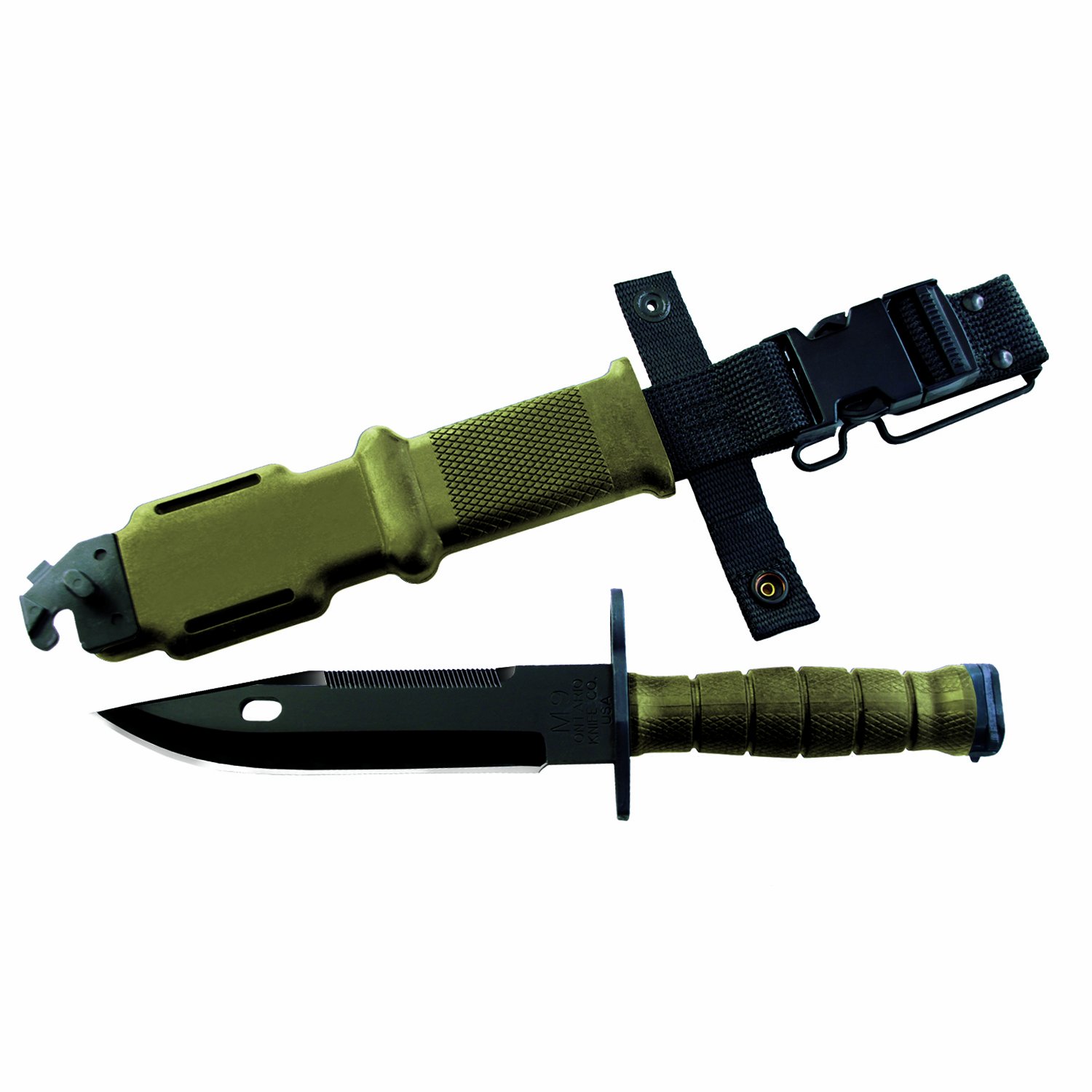
M9 Bayonet:
Officially adopted by the United States in 1984, Charles A. "Mickey"
Finn creation is a utility knife bayonet that is also an effective wire
cutter when combined with the scabbard. The 7 inch blade strongly
resembles its previous incarnation, the Buck 184 “Buckamster”.
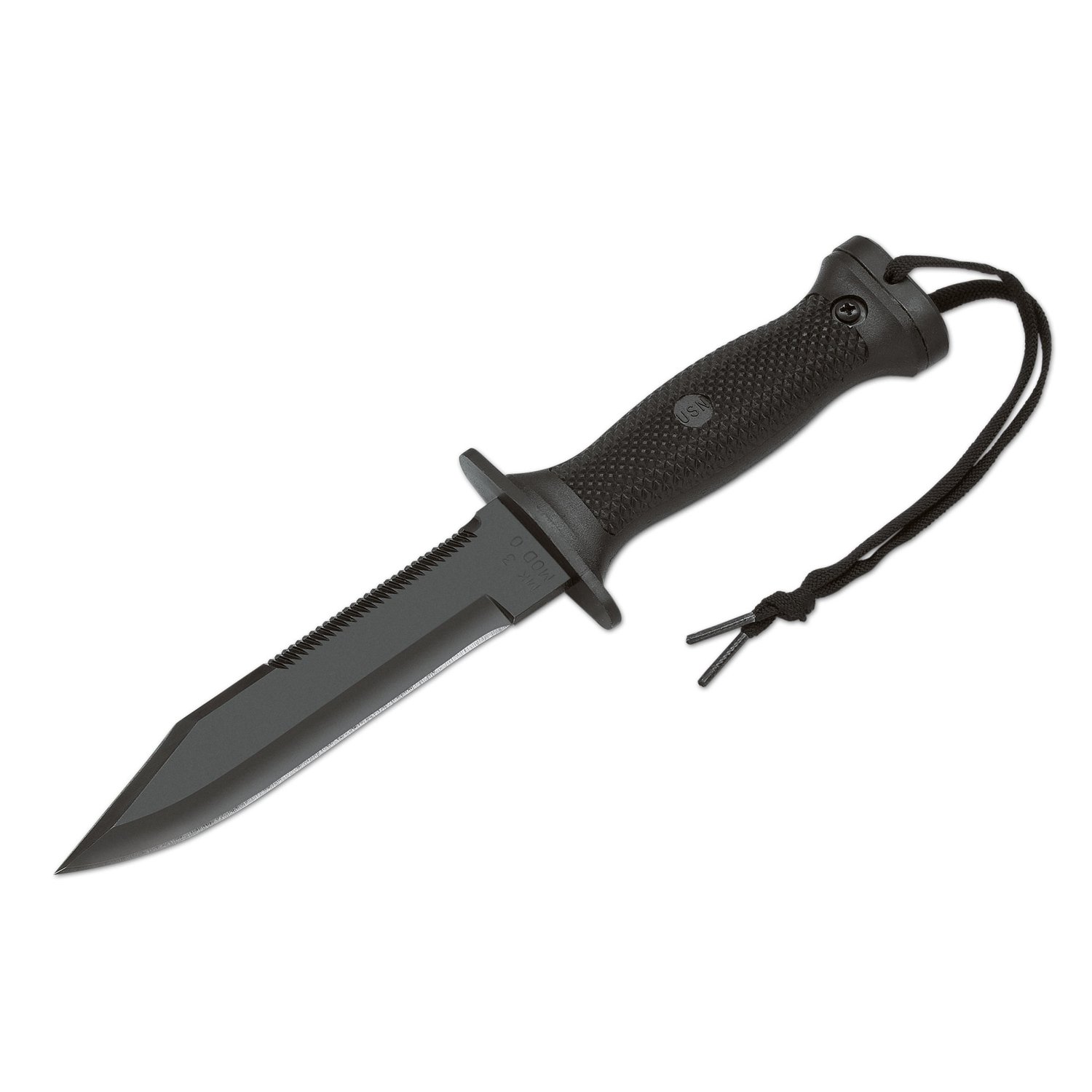
OntarioMKIII Navy Knife:
The Mark 3 has a 6 inch 440A stainless steel blade and is standard
issued to Navy SEALS. Rumor has it these are dumped pretty soon after
training. In spite of this there’s nothing wrong with the knife itself.
The knife can be used for prying, as a hammer, and the tip will
penetrate well when used as a weapon. The steel could be better but
really for its intended use its more than adequate and many people have
found it to be an outstanding utility/GP knife.

Ontario 6504 OKC3S Marine Bayonet:
Marines get their own knives, issued exclusively to the United States
Marine Corps. It sure is a well made solid knife with a sound and
functional blade shape. The 8" blade is made of 1095 steel. The handle
is made of grooved Dynaflex. It's a bit on the larger side, but there's
not a lot that can go wrong with this knife.
KA-BAR: The
tried and true KA-BAR is provided to Navy SEALS upon graduation. On One
side there’s the SEAL logo and on the other there’s the name of a SEAL
that has died in combat. Except for these engravings, it’s a typical
K-BAR with its leather grip and sheath. This knife will rarely get used
for obvious reasons.
The KA-BAR itself is still in active
service with the Army, Navy (as the USN Mark 2 Utility Knife) and USMC
(Knife, Fighting Utility). It has a 7-inch blade made of 1095 steel
which is a very good steel for such a knife. Combined with its time
proven design, it is indeed a tool and weapon that can effectively
perform a number of tasks without compromising.
The KA-BAR is a
legend in the knife world but it is not perfect. A modern-day survivor
might want to avoid the leather washer grip and sheath which can rot and
go with synthetic versions. Dont fall for the negative hype though.
Well taken care of leather handles and sheaths can and have lasted for
centuries, even with honest hard use and a bit of abuse. I happen to own
a couple knife with leather sheaths that are over a hundred years old
and the sheatha are still very much functional. The narrow tang is also a
weaker design compared to a full tang and can bend under enough
leverage. Again, it can take a lot of hard use, and even if bent
slightly the knife is still functional. On the other hand the narrow
tang makes it much lighter than a full tang version.
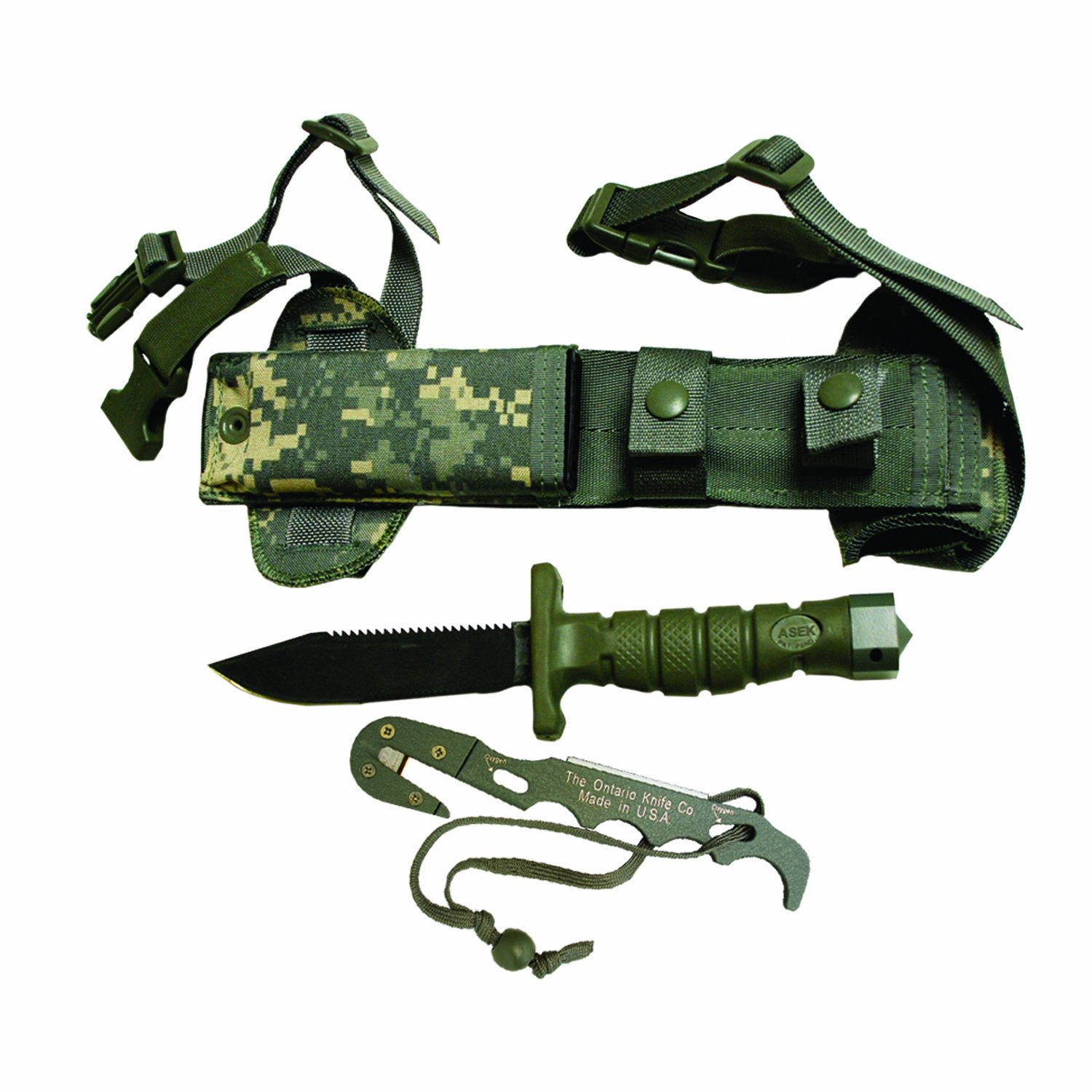
ASEK Survival Knife:
The Air Crew Survival Egress knife made by Ontario entered service with
the U.S. Army in 2003 but is often chosen by other branches as well
because of its practicality and light weight. The 1095 blade is 5 inches
long, the generous cross piece means the hand wont be slipping forward
when used as a weapon or trusting during use.
Yarborough: Made by Chris Reeve, its also available for civilians as
“The Green Beret Knife”. The
“Yarborough”, is a tough, practical knife, made of CPM S35VN stainless
steel with a 7 inch balde. The Yarborough is received by the Special
Forces upon graduation. Like with the SEAL KA-BAR, chances are that it
will be treasured rather than used by the person that receives it.
What actually gets Carried
Issued
doesn’t mean used. In some cases what a person got issued isn’t what he
liked, or they are looking for something else. Maybe they want a
smaller, lighter knife or maybe a better one, so they leave the issued
one behind. In that case a visit to the nearest PX/BX offers other
commercial options to choose from. The criteria still follows the same
guidelines though: Around 6 inches long, tough yet light and hopefully
not very expensive. Each person will pick whatever it is they favor.
Keep in mind that not everyone is a knife fanatic or collector, so
choices vary. SEALs and Special Forces guys tend to know a bit more
about them and will often buy their own quality knives. Some of the most
common choices are:
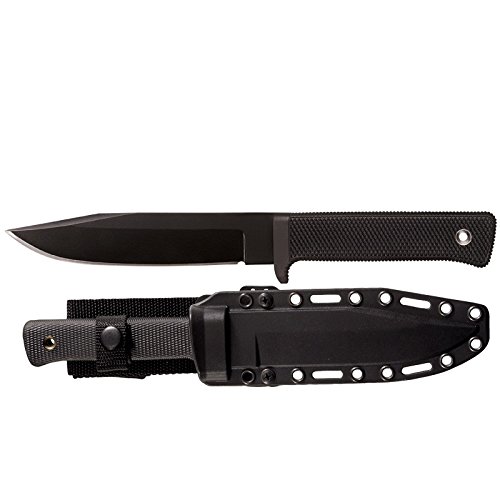
Cold SteelSRK:
The SRK is tough, affordable and made of AUS 8A Stainless. Yes, there
are better knives, but its very hard to beat for the money. Keep in mind
troops aren’t exactly swimming in money. For around 60 bucks a soldier
gets a 6 inch knife that is well designed with classic lines, a
comfortable handle and just over 8 ounces. It can tolerate considerable
abuse so it wont shy away from poking holes into tin cans or being used
as a prybar. Those that need or want something bigger and don’t mind the
weight will go for the Cold Steel Recon Scout.
Ka-Bar Becker BK7 Combat Utility Fixed Blade Knife: Another
popular choice. The BK7 is a heavy 7 inch knife but it compensates by
getting more knife in exchange for that extra weight. It has a wide
blade, made of 1095 steel and the full tang gives it that extra
resistance you might be looking for.
The SOG Seal Team Elite $94.07
SOG SEAL Team Elite and SEAL Pup:
These actually honor their name and are often chosen by Navy SEALS
looking for a good knife. 7 inch AUS8 blade with a nice penetrating tip,
the tang is extended so as to use it as a hammer/glass breaker/skull
crasher. Its light, under $100 bucks and has been tested extensively for
tip abuse resistance and water corrosion. The
SEAL Pup is a shorter version of the same knife at 4.75”.
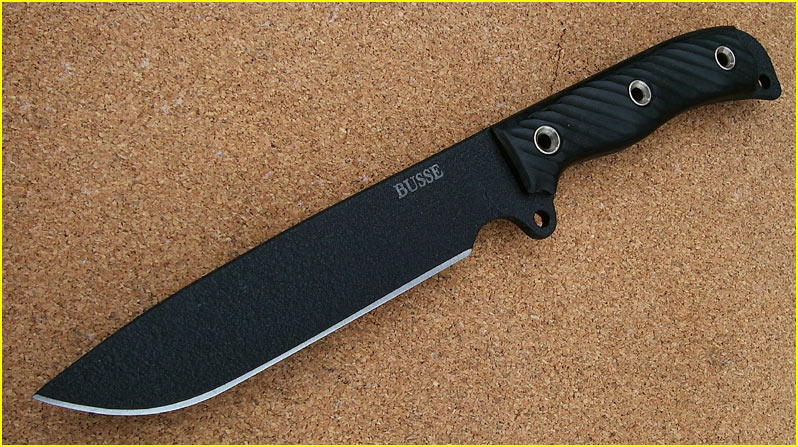
Busse BossJack: There’s
at least one Special Forces team that I know of where one of them
ordered a Busse Boss Jack for each of the members. The knife is pricy,
but then again the steel, craftmanship and abuse resistance are
outstanding. I know that Busse knives are often chosen by both SF and
SEAL guys that know a thing or two about knives and appreciate the
quality. I’ve reviewed the Boss Jack before so check my youtbube videos
if interested.
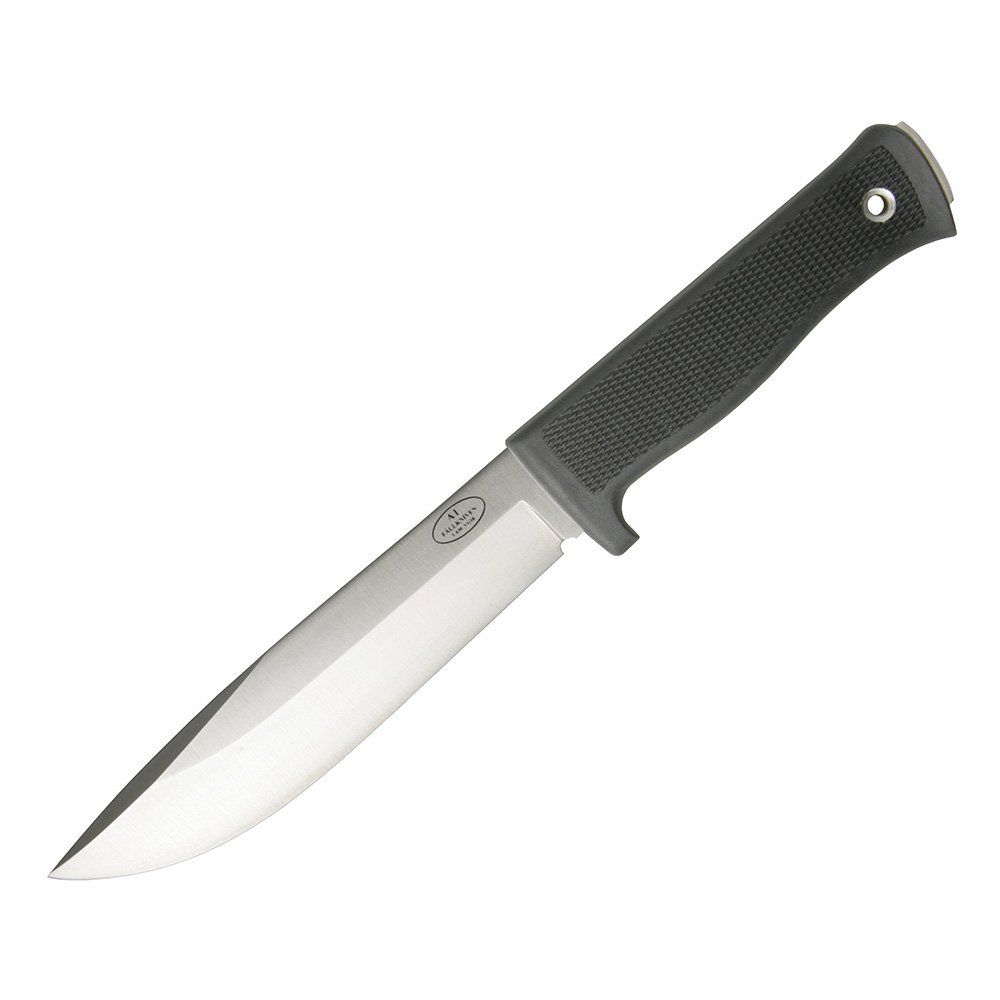
Fallkniven: The
A1, F1 and
S1
are common choices for service men looking for an excellent production
knife within reasonable price ranges. These Swedish-made knives are of
outstanding quality, with excellent steel being used and properly heat
treated. People just are not let down by Fallkniven knives. They aren’t
cheap, but the VG10 steel used is excellent, they are light, resistant
and have a classic, time-proven blade geometry that works very well for
most tasks.
While writing this article I received an email from a friend of mine that was Army Special Forces, here’s part of his reply:
"I was issued a
Gerber Multiplier
as a tool before the SF thing, was issued a M9 bayonet at every unit
over the years and after SF--as with all graduating SF guys--got a
Yarborough knife. The Yarborough is a good knife, but for various
reasons I never carried it in the field (liked others more, didn't want
to screw it up, etc.). I tended to carry, for a larger belt knife
anyway, a Fallkniven A1 or S1, depending on the year and what I was
doing.
The Fallknivens are some of the best
field/combat/fighting knives I've ever had, and quite durable with use.
They make some nice hunting type knives, too. Swedish company, but
they sell in the states and UK a fair bit."
What
gets issued isn’t always the best but you still know there’s a certain
standard, so military issued knives can be great budget choices for
prepers and survivalists. Then of course, for a bit more money there are
options that can offer more. Be careful though. Sometimes companies
advertise their knives as super doper Chairborn Commando, put a crazy
price tag on them, and the knife still cant do for you what the humble
KA-BAR can.
FerFAL

 Posts
Posts